What Is the Best Type of Double Front Entry Doors?
Choosing the best type of double front entry doors involves more than comparing attractive photographs. These doors shape your home’s first impression, daily comfort, security, and energy performance. A pair of solid wood doors may offer warmth and character, while fiberglass can provide better resistance to moisture, dents, and changing temperatures. Steel brings strength, but it may require careful finishing in humid or coastal areas.
Real-world performance depends on details that are easy to overlook. Measure the opening accurately, including the frame, threshold, and available swing space. Check whether both panels open or only one operates regularly. A wide entry can feel welcoming, yet heavy doors may become inconvenient for children, older adults, or frequent deliveries. Hardware quality matters too. Hinges, multipoint locks, weatherstripping, and properly fitted glass can influence the experience more than the door material alone.
There is no universal winner.
This guide compares wood, fiberglass, steel, and glass-accented designs through practical factors. These include durability, insulation, maintenance, security, appearance, and long-term value. Manufacturer testing and professional installation should guide the final decision, especially when the entrance is exposed to wind-driven rain or direct sunlight. I have found that design preferences can change after seeing a door sample beside the actual exterior wall. That is worth remembering. A beautiful showroom model may look different under your porch lighting. The best double front entry doors are the ones that suit your climate, architecture, routines, and budget without creating unnecessary maintenance.
Double Front Entry Door Types: Wood, Fiberglass, Steel, and Glass
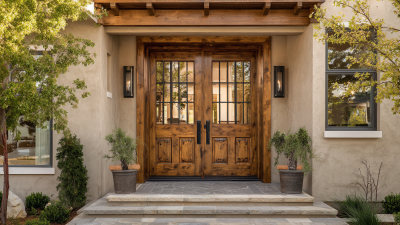
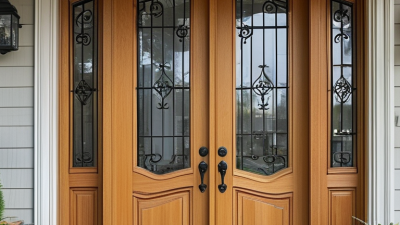
The best double front entry door depends on your climate, security needs, and home style. Wood offers natural warmth, visible grain, and easy customization. However, it needs regular sealing, especially near rain, snow, or strong sunlight. A small finish failure can allow moisture into the door.
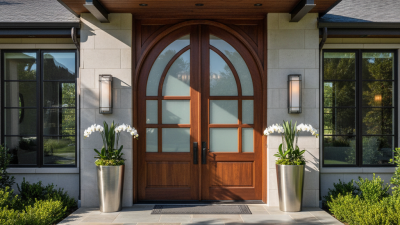
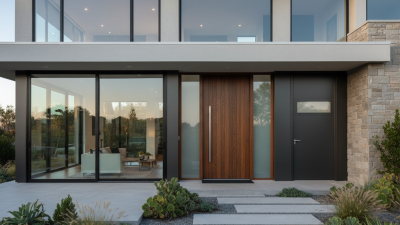
Fiberglass provides a practical balance. It can imitate wood grain, resist warping, and require less maintenance. Steel delivers strong security and usually costs less than premium wood. Yet, damaged coatings may expose steel to rust. Glass creates a brighter entrance and makes a narrow foyer feel larger. Use insulated, laminated, or tempered glass for better comfort and safety. More glass also means less privacy, unless textured panels or curtains are added.
Tips: Check the door’s frame, weatherstripping, hinges, and threshold together. A strong slab performs poorly when the frame leaks air. Measure the opening carefully before ordering. I have seen attractive double doors become difficult to operate because the floor was slightly uneven. That detail is easy to miss. Consider outward appearance, daily maintenance, and local weather rather than choosing by photographs alone. Wood may suit a traditional home, while fiberglass fits busy households. Steel works well for a clean, secure look. Glass is useful when daylight matters most. There is no perfect material.
What Is the Best Type of Double Front Entry Door?
A comparison of wood, fiberglass, steel, and glass double front entry doors using common performance characteristics.
Fiberglass generally offers the best balance of insulation, weather resistance, and low maintenance. Steel typically provides the highest security, wood delivers natural appearance and customization, while glass maximizes daylight but usually requires more attention to privacy, heat control, and impact resistance. Scores are general material-based comparisons; actual performance depends on door construction, glazing, hardware, weatherstripping, finish, and installation.
Compare Door U-Factors Against ENERGY STAR’s 0.27 Benchmark
When choosing double front entry doors, compare their U-factors before comparing finishes, hardware, or decorative glass. U-factor measures how quickly heat passes through the complete door assembly. Lower numbers indicate better insulation. For a practical reference, use ENERGY STAR’s 0.27 benchmark. A door rated near 0.27 generally resists heat transfer better than one rated 0.35 or 0.40. This difference can affect winter comfort, summer cooling, and monthly energy use.
Double doors require closer inspection because the center meeting point creates another potential air-leakage zone. Check the U-factor for the entire assembly, including panels, frames, sidelights, and glass. A heavily glazed door may look elegant but perform poorly if its glass has a weak insulating value. Weatherstripping should compress evenly around both panels. The center astragal should close firmly without excessive force. Small gaps matter.
The 0.27 benchmark is useful, but it is not a magic number. Climate, wall insulation, sun exposure, and installation quality also influence performance. A lower-rated door can still disappoint when the frame is poorly sealed. That detail is easy to overlook. Request a certified whole-door rating, not a panel-only claim. Then compare similar sizes and configurations. In practice, the best double entry door is often the one with strong thermal ratings, reliable seals, and an installation plan that prevents movement around the opening.
Choose In-Swing or Out-Swing Pairs by Space and Egress Codes
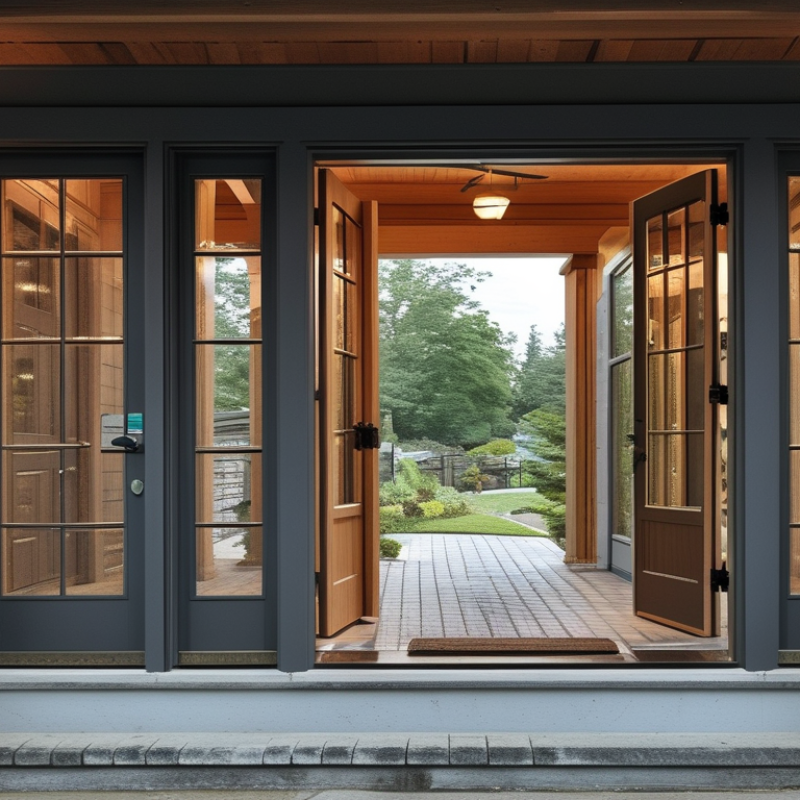
The best double front entry doors depend on movement, clearance, and local egress rules. In-swing pairs keep the exterior walkway clear. They also protect hinges from rain and public interference. However, each leaf needs interior room to open fully. Furniture, stair landings, and narrow foyers can create a dangerous pinch point. A practical rule is simple: measure the door arc, not just the rough opening.
Out-swing pairs preserve valuable foyer space. They can also support faster exit movement during an emergency. Yet snow, planters, steps, and a public sidewalk may block the swing. The 2021 International Residential Code generally requires one egress door with at least a 32-inch clear opening. It must open without a key or special knowledge. Local amendments still control. NFPA’s Home Structure Fires report recorded about 374,300 residential structure fires in 2022. That figure makes reliable exit planning more important than decorative symmetry. For larger occupancies, NFPA 101 commonly requires doors to swing with egress travel. That rule may not apply to every private home.
Tips: Confirm the clear opening after both leaves and hardware are installed. Check landing depth, threshold height, snow storage, and sidewalk ownership. Use a door schedule approved by your building official. A wider pair is not automatically better. Sometimes, an attractive in-swing design fails because a nearby console blocks one leaf. That is an easy mistake, and it deserves a second measurement.
Evaluate Security with Multi-Point Locks and ANSI Grade 1 Hardware
Double front entry doors can create an impressive entrance, but their width demands careful security planning. The meeting point between both doors is often the vulnerable area. A single latch may not hold the doors firmly against repeated pressure. Small gaps can also expose the frame and weather seals.
Multi-point locks improve this design by securing the door at several locations. Bolts can engage near the top, middle, and bottom of the frame. This distributes force instead of concentrating it at one latch. The doors should close evenly, without lifting, dragging, or leaving visible gaps. That detail matters. Poor alignment can reduce the lock’s performance.
ANSI/BHMA Grade 1 hardware offers a strong commercial-grade benchmark for residential entry systems. It supports durability and resistance to forced operation, but it cannot protect a weak door frame. Check the strike plates, mounting screws, hinges, and surrounding structure. Screws should reach solid framing, not only thin trim. Glass panels also deserve attention, especially near the lock area. No setup is flawless. Even experienced installers can overlook a loose hinge or a warped sill. Test the lock repeatedly with both doors fully closed. If the key feels rough or the bolts hesitate, correct the alignment before relying on the system. Local building requirements should also guide the final installation.
What Is the Best Type of Double Front Entry Doors? - Evaluate Security with Multi-Point Locks and ANSI Grade 1 Hardware
| Evaluation Dimension |
Recommended Specification |
Why It Matters for Double Doors |
Practical Assessment |
| Door configuration |
Active and inactive leaves with a properly reinforced meeting stile |
The center joint is a potential weak point when the two leaves can flex or separate |
Preferred |
| Locking system |
Multi-point lock engaging the top, center, and bottom areas of the door |
Distributes resistance over more than one location and helps limit prying at the latch side |
Strong choice |
| Primary lock grade |
ANSI/BHMA Grade 1 hardware for the main latch or mortise lock |
Grade 1 is the highest performance grade in the common three-grade ANSI/BHMA classification |
Best residential security target |
| Lock standard |
Hardware tested under the applicable ANSI/BHMA standard, such as A156.13 for mortise locks or A156.2 for bored and cylindrical locks |
A published standard provides measurable durability and operational requirements rather than relying only on appearance |
Verify documentation |
| Inactive-leaf security |
Top and bottom flush bolts or concealed shoot bolts connected to the multi-point mechanism |
Prevents the inactive leaf from being forced inward or pulled away from the active leaf |
Essential |
| Strike and frame reinforcement |
Full-length or deep structural reinforcement secured into the wall framing, not only the trim |
A strong lock can still fail if the strike or frame is attached to weak material |
Essential |
| Cylinder protection |
High-security cylinder with restricted key control and a protected escutcheon |
Reduces exposure to unauthorized key duplication and direct cylinder attacks |
Highly recommended |
| Hinge protection |
Security studs, non-removable pins, or hinge bolts on outward-swinging doors |
Helps maintain door retention if exposed hinges are attacked |
Recommended |
| Glazing near the lock |
Laminated safety glass or securely retained glazing with a limited reach-through area |
Reduces the risk of reaching the interior thumb turn after glass breakage |
Important for glazed doors |
| Egress operation |
Interior release that allows quick exit without a key, subject to local code requirements |
Security hardware must not create a life-safety obstruction during an emergency |
Code verification required |
| Weather sealing |
Continuous perimeter seals, an interlocking meeting stile, and an adjustable threshold |
Limits air and water leakage around the larger center joint found on double doors |
Strongly recommended |
| Installation accuracy |
Even reveal, aligned bolts, rigid frame, and smooth operation without excessive force |
Misalignment can prevent multi-point bolts from fully engaging and may reduce security |
Critical |
| Overall best combination |
Inswinging double doors with a reinforced meeting stile, multi-point locking, ANSI/BHMA Grade 1 primary hardware, protected cylinders, reinforced strikes, and code-compliant egress |
Combines distributed locking, stronger frame attachment, improved center-joint protection, and safe interior operation |
Best overall security profile |
Note: ANSI/BHMA grade classifications apply to the specific hardware product and test standard, not automatically to the complete door assembly. Final selection should also comply with local building, fire, accessibility, and emergency-egress requirements.
Match Door Width, Rough Opening, and NFRC Performance Ratings
What Is the Best Type of Double Front Entry Doors?
The best double front entry doors begin with accurate sizing, not style. Measure the finished wall opening, then compare it with the door unit and rough opening requirements. Door width affects traffic flow, framing, hardware clearance, and installation cost. A common mistake is measuring only the visible doorway. The surrounding frame may hide uneven studs, shims, or old construction. Measure at the top, center, and bottom. Record the smallest dimension.
Rough opening space must allow the unit to be leveled, plumbed, and insulated. Double doors need extra attention because both slabs must meet evenly at the center. A small framing error can create drafts or uneven weatherstripping. Ask the installer for the manufacturer’s exact rough opening dimensions before ordering. Do not rely on a standard size. That assumption can be expensive.
NFRC performance ratings add another layer of confidence. Review U-factor for heat transfer, solar heat gain coefficient for sunlight impact, and visible transmittance for daylight. In colder regions, a lower U-factor often supports better indoor comfort. In sunny climates, a lower solar heat gain coefficient may reduce overheating. Ratings must match the complete door assembly, including glazing and sidelights. Check the label, not just the sales description. Even a well-rated door can perform poorly when installed without continuous insulation and careful air sealing. Recheck the sill, meeting stile, and threshold. Small gaps matter.