How to Choose a Carbon Steel Plates Supplier?
Choosing the right Carbon Steel Plates Supplier can determine whether a project runs smoothly or faces costly delays. The decision affects plate quality, delivery timing, fabrication efficiency, and long-term performance. A reliable supplier should understand your application, not merely send the lowest quotation.
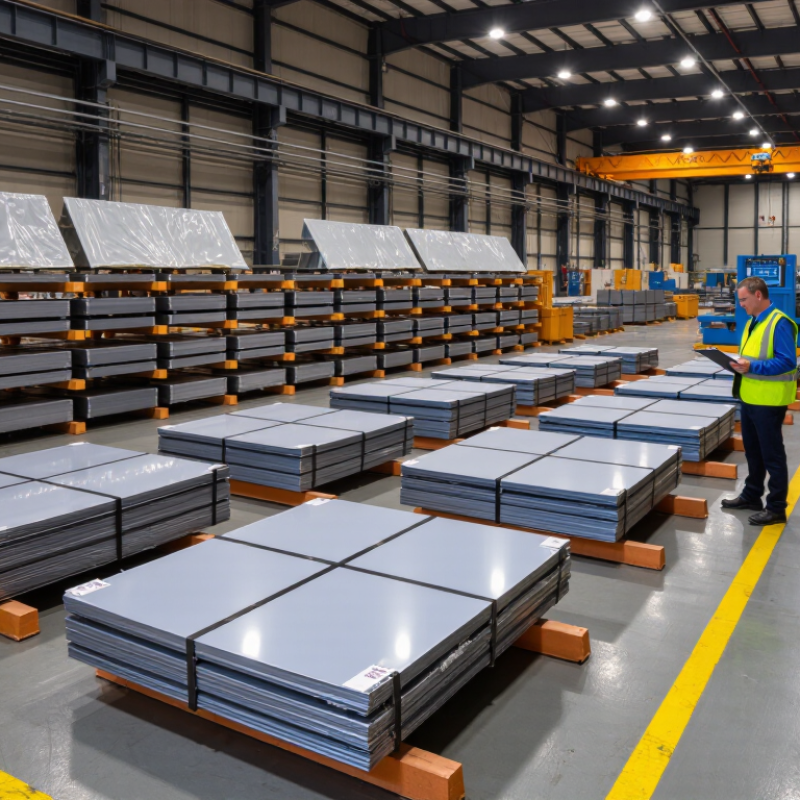
Look for clear material specifications, including grade, thickness, width, length, and required surface condition. Experienced suppliers can explain differences between structural, pressure-vessel, and wear-resistant plates. They should provide mill test certificates, heat numbers, and traceable inspection records. Ask how plates are stored. Covered, dry storage matters when moisture could create rust before fabrication. Request realistic lead times, packaging details, and replacement procedures for damaged materials.
Ask for evidence.
Supplier experience also deserves close attention. Review similar projects, production capacity, cutting services, and customer references. An established Carbon Steel Plates Supplier should communicate openly when a requested grade is unavailable. Honest limitations are safer than confident promises. Independent inspection may be valuable for critical applications, especially when plates require ultrasonic testing or strict dimensional tolerances.
A checklist helps, but it cannot replace judgment. I have seen buyers compare price alone and overlook inconsistent documentation. That mistake can affect welding plans, compliance reviews, and installation schedules. Even a reputable supplier may make an error, so confirm every critical detail in writing. Compare quality systems, technical support, logistics reliability, and after-sales responsibility before signing an order. The best choice is not always the cheapest one. It is the supplier that offers dependable steel, verifiable information, and practical support throughout the project.
Define Required Grades: ASTM A36 Has ≥36 ksi Yield Strength; S355 Has ≥355 MPa
When choosing a Carbon Steel Plate Supplier, begin with the required grade, not the lowest quotation. ASTM A36 specifies a minimum yield strength of 36 ksi, or about 250 MPa. S355 requires at least 355 MPa, making it the stronger choice for many structural applications. These values are not interchangeable.
Ask for the applicable standard, heat number, mill test certificate, and full chemical results. Check whether the certificate reports yield strength at the ordered thickness. This detail is easy to miss. EN 10025-2 defines S355 grades, while ASTM A36 covers a different specification system and testing approach. A reliable supplier should also explain impact testing, plate tolerances, surface condition, and traceability before shipment.
The World Steel Association reported about 1.89 billion tonnes of crude steel production in 2023. Such scale does not guarantee consistent plate quality. OECD steel industry analyses also continue to highlight global excess capacity and uneven market conditions. Therefore, compare documented performance, not only production volume. From practical purchasing experience, certificates often look complete until heat identification is checked against the plate markings. I have made that assumption before, and it created unnecessary verification work. Request independent testing when the application carries high structural risk. Supplier audit records, calibration documents, and delivery history provide stronger evidence than polished sales language.
Carbon Steel Plate Grade Comparison
Minimum yield strength and tensile-strength ranges for ASTM A36 and EN 10025-2 S355JR
ASTM A36 specifies a minimum yield strength of 36 ksi, approximately 248 MPa, and a tensile strength of 400–552 MPa. S355JR specifies a minimum yield strength of 355 MPa and a tensile strength of 470–630 MPa for the referenced grade and thickness range. Actual values may vary with plate thickness, product standard, and subgrade.
Check Plate Dimensions and Thickness Tolerances Under EN 10029
When choosing a carbon steel plate supplier, verify thickness control under EN 10029. The standard defines permitted thickness deviations according to nominal thickness, plate width, and tolerance class. Do not accept a general “mill tolerance” statement. Request the exact EN 10029 class shown on the quotation and inspection certificate.
A reliable supplier should provide heat numbers, test reports, and measured dimensions for each batch. Compare the certificate with your purchase order, especially thickness, width, length, flatness, and sampling location. World Steel Association data recorded about 1.89 billion tonnes of crude steel production in 2023, showing the scale of global supply. However, large production volume does not guarantee consistent plate accuracy. OECD steel market reports also highlight continuing pressure on steel margins and trade flows. Cost-cutting can affect inspection depth. That deserves attention.
Tips: Ask for three measured thickness points, not one. Check the plate near corners and along the centerline. Confirm whether measurements use calibrated equipment. A certificate alone is not enough. In practical purchasing, buyers sometimes focus on grade and forget dimensional tolerance. That mistake can create machining waste, fit-up problems, and extra labor. I would also request a sample inspection record before signing a long-term contract. It may feel excessive, but unclear tolerance language is harder to correct later.
Assess Production Capacity, Lead Times, and Delivery Performance
How to Choose a Carbon Steel Plates Supplier?
A supplier’s production capacity should match your actual plate specification, not only its annual tonnage. The World Steel Association reported 1,892.2 million tonnes of crude steel production worldwide in 2023. That figure shows scale, but it does not confirm reliable plate availability. Ask for rolling-mill capacity, maximum plate width, thickness range, heat-treatment capability, and recent production records. A supplier producing 20-millimeter plates may struggle with 80-millimeter quenched and tempered plates. Request sample mill certificates, inspection procedures, and realistic monthly output. Technical details reveal more than impressive capacity claims.
Lead time should include production, testing, documentation, inland transport, and port handling. Confirm each stage in writing. For a project order, request a rolling schedule and weekly progress updates. The World Bank’s Logistics Performance Index 2023 shows that logistics reliability varies significantly between markets. Delays often begin before the plate leaves the factory. Check whether the supplier reserves transport capacity during peak seasons. Ask for evidence from comparable shipments, including promised and actual dispatch dates. One missed port cutoff can affect an entire installation schedule.
Delivery performance deserves measurable proof. Review the supplier’s on-time-in-full rate for the previous six or twelve months. Also examine claims, replacement timelines, and responses to thickness or surface defects. UNCTAD reports that maritime transport carries over 80% of global merchandise trade by volume, so port disruption remains a practical risk. Build buffer time, even when the supplier sounds confident. I would not rely on a perfect forecast. No checklist is perfect. A small trial order can expose weak packaging, inconsistent documents, or slow communication before the main contract begins.
How to Choose a Carbon Steel Plates Supplier? - Assess Production Capacity, Lead Times, and Delivery Performance
Comparison framework for evaluating anonymous carbon steel plate suppliers. Figures use common industry units and should be verified against current production schedules, mill certificates, and logistics records.
| Supplier Profile | Annual Plate Capacity
(Metric Tons) | Typical Monthly Output
(Metric Tons) | Average Capacity Utilization | Stock Material Lead Time | Standard Production Lead Time | Custom Grade or Size Lead Time | On-Time Delivery Rate
(Last 12 Months) | Average Dispatch Variance | Export Documentation Readiness | Evaluation Result |
| Supplier Profile A | 180,000 | 13,500–15,000 | 72% | 7–10 calendar days | 25–35 calendar days | 45–60 calendar days | 96% | 1–3 days | Complete standard package | Strong option |
| Supplier Profile B | 95,000 | 6,500–8,000 | 81% | 10–15 calendar days | 30–45 calendar days | 55–75 calendar days | 91% | 4–7 days | Available upon request | Acceptable with monitoring |
| Supplier Profile C | 260,000 | 19,000–22,000 | 68% | 5–8 calendar days | 20–30 calendar days | 40–55 calendar days | 98% | 0–2 days | Complete standard and export package | Best delivery capability |
| Supplier Profile D | 60,000 | 4,000–5,000 | 86% | 14–21 calendar days | 35–50 calendar days | 60–90 calendar days | 88% | 6–10 days | Basic documents; extra verification required | Suitable for flexible schedules |
| Supplier Profile E | 140,000 | 10,000–12,000 | 75% | 8–12 calendar days | 28–40 calendar days | 50–70 calendar days | 94% | 2–4 days | Complete standard package | Balanced option |
| Supplier Profile F | 320,000 | 24,000–28,000 | 64% | 5–7 calendar days | 18–28 calendar days | 35–50 calendar days | 97% | 1–2 days | Complete export package with digital records | High-volume preference |
Recommended verification items: furnace and rolling-mill capacity, current order backlog, minimum order quantity, dimensional tolerances, material test certificates, packing standards, port handling capability, and historical delivery records.
Audit Quality Systems, Traceability, and ISO 9001 Compliance
How to Choose a Carbon Steel Plates Supplier?
Audit Quality Systems, Traceability, and ISO 9001 Compliance
A reliable carbon steel plate supplier should provide more than competitive pricing. During supplier reviews, inspect the quality system, not only the finished plates. ISO 9001 certification indicates a controlled management process, but it does not automatically prove every plate meets your specification. Request the current certificate, scope, issuing body, and recent audit status. Then compare these details with the supplier’s actual production controls.
Tips: Ask for a sample inspection plan, mill test certificate, and heat-number record. Verify that the heat number appears on the plate, packing list, and certificate. Check chemical composition, tensile strength, thickness tolerance, and ultrasonic testing records when required. Small gaps matter.
Traceability should follow each plate from raw material intake through cutting, inspection, storage, and shipment. A supplier should explain who approves nonconforming material and how corrections are documented. Visit the facility if possible. Look for clear labels, separated stock, calibrated measuring tools, and signed inspection records. I have seen impressive certificates paired with weak warehouse discipline. That mismatch deserves attention. No audit is perfect. Leave room for doubt, and ask one more question when a record looks unusually clean or incomplete.
