How to Choose Exterior Decorative Wall Panels?

Choosing Exterior Decorative Wall Panels is not only a design decision. It affects weather protection, maintenance, and how a building feels from the street. A sample may look warm beneath showroom lights, then appear stark beside brick or dark window frames. Small choices matter. Designers often stress the value of detail. Charles Eames, the American designer, put it this way: “The details are not the details. They make the design.” His principle applies when comparing panel proportions, surface texture, and trim.

This guide explains how to choose panels that suit your building and local conditions. It covers material options, color and finish, durability, installation requirements, and care. You will also find practical questions to ask suppliers, such as how panels handle driving rain, strong sun, and seasonal temperature changes. Looks are not enough. Ask for product specifications and installation guidance, and check that the proposed wall assembly suits your project. A well-chosen finish can still disappoint if joints are poorly detailed or the substrate is unsuitable.

There is no single best panel for every exterior. Budget, exposure, building style, and maintenance capacity all matter. I still find one point easy to underestimate: how a large finished wall will look beside existing materials. Compare full-size samples outdoors, not just small swatches indoors. That extra step takes time. It can also reveal an awkward color or texture before installation begins.
How to Choose Exterior Decorative Wall Panels?

Assess the Building’s Climate, Exposure, and Wall Conditions

Exterior panels should match the wall’s actual weather, not just the regional forecast. The U.S. Department of Energy’s Building America climate map divides locations into eight climate zones, from hot-humid to very cold. Use the zone as a starting point, then check local rainfall, freeze-thaw cycles, sun exposure, and wind. NOAA’s 1991–2020 U.S. Climate Normals provide 30-year temperature and precipitation averages; compare your site with nearby station data rather than relying on a broad regional label. Coastal walls face salt spray, while shaded north-facing walls may stay damp longer. Small cracks matter.

Inspect the wall before comparing panel materials. Look for peeling paint, soft sheathing, open joints, failed sealant, and staining below windows. These clues may point to trapped moisture or poor drainage, which new cladding alone will not fix. Check flashing and drainage paths, and confirm the substrate is flat and sound. On a sunny wall, dark panels may absorb more heat; on an exposed façade, wind-driven rain can test joints and edges. I would take photos after rain and again on a dry day. It is not a perfect test, but it can reveal patterns that a quick inspection misses. Salt is relentless.

Compare Panel Materials, Durability, and Weather Resistance

Choose exterior decorative wall panels by matching their material to the wall’s exposure, not just its color. Fiber-cement panels resist impact and moisture well, but cut edges and joints need proper sealing. Wood offers a warm, natural texture, though sun and rain can fade or swell it without regular finish maintenance. PVC panels handle damp conditions and weigh little; however, quality varies, and some products can expand in strong heat. Metal panels are sturdy, but scratches or damaged coatings may invite corrosion, especially near salty air. Small details matter.

Durability depends on installation as much as material. Check whether the panel system allows water to drain and air to circulate behind it. Ask for test information on UV exposure, freeze-thaw cycles, and wind resistance for your climate. A sunny south-facing wall may need better fade resistance than a shaded entry. I would inspect a full-size sample outdoors before deciding; indoor lighting can be misleading. Not perfect, but useful. Also compare cleaning needs, repair options, and the condition of your existing wall. A long warranty sounds reassuring, yet its exclusions deserve a close read. A panel that looks tough may still fail early if water collects at an unsealed edge.

Choose a Style, Color, Texture, and Panel Size

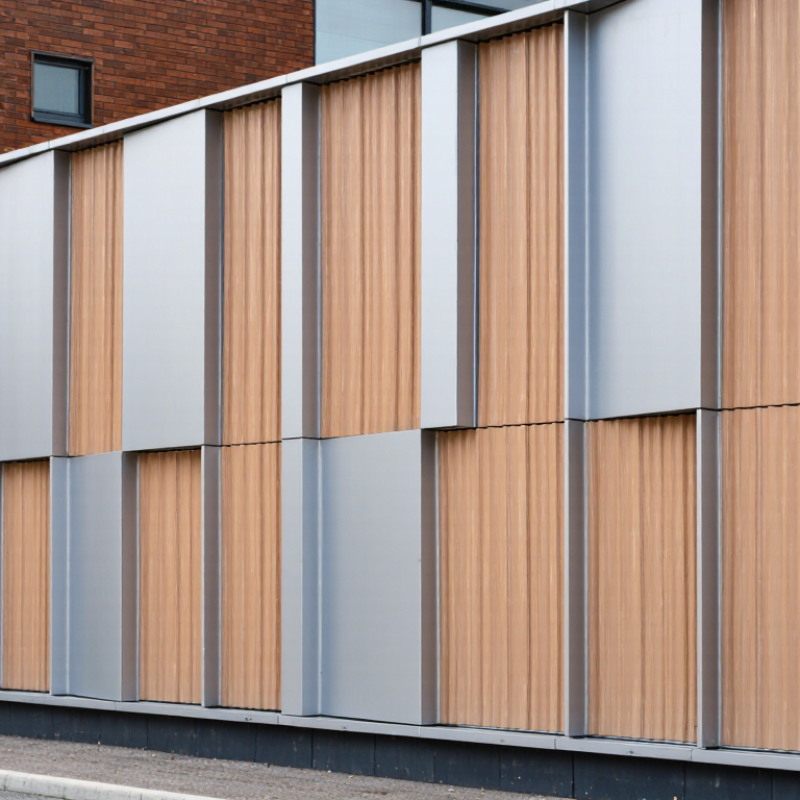
Choosing exterior decorative wall panels starts with the building’s shape and surroundings. A clean, linear style can suit a modern facade, while a textured or irregular pattern may soften a plain wall. Look at nearby rooflines, windows, and paving before deciding. The panel should support the architecture, not compete with it.

Color changes outdoors. A small sample may look warmer or cooler under direct sun than it does indoors. View it against the actual wall in morning and afternoon light. Pale colors can make a facade feel larger, while deep tones often emphasize edges and shadows. There are exceptions. Dust, nearby trees, and the wall’s orientation can change how a finish appears over time, so consider maintenance before choosing.

Texture matters up close and from the street. Fine grooves create subtle shadows; pronounced relief can make a stronger statement but may collect dirt. Panel size also affects the finished look. Large panels reduce visible joints, while smaller ones can suit narrow sections or detailed elevations. Check dimensions against window spacing and wall height, and review the installation requirements for joint placement and movement. I would not decide from a single sample. It is easy to misjudge scale on a small piece, and even careful planning may need adjustment on site.

How to Choose Exterior Decorative Wall Panels? - Choose a Style, Color, Texture, and Panel Size

Decision Options to Consider Best Suited For Practical Selection Tip
Architectural style Board-and-batten, horizontal lap, vertical slats, shingle-style, or large-format panels Traditional homes often suit lap or shingle patterns; contemporary designs often use clean vertical lines or broad, simple panels. Match the panel layout to the home’s existing proportions, trim, roofline, and architectural details.
Color Light neutrals, warm earth tones, muted greens and blues, or darker accent colors Light colors can make a facade feel brighter; darker colors can create contrast and highlight architectural features. View samples outdoors at different times of day. Sunlight, shade, nearby landscaping, and surrounding materials can change how a color appears.
Texture and finish Smooth, lightly embossed, wood-grain, stone-look, or matte finishes Smooth finishes create a streamlined appearance; textured finishes add visual depth and can complement natural materials. Check a full-size sample from the street as well as close up. Confirm that the selected finish is intended for exterior exposure.
Panel size and direction Narrow or wide panels; short or long formats; horizontal, vertical, or patterned installation Longer horizontal lines can emphasize width, while vertical layouts can make a wall appear taller. Consider wall dimensions, openings, corner details, and layout before choosing. Larger panels may reduce visible joints but can require more careful handling and cutting.
Material and exposure Fiber cement, engineered wood, metal, PVC, or other exterior-rated panel materials Suitability depends on local climate, building design, wall assembly, and the manufacturer’s installation requirements. Compare water-management details, finish requirements, impact resistance, and maintenance needs. Use products and fixings rated for the intended exposure.
Maintenance Cleaning, repainting or refinishing, joint inspection, and occasional repair Maintenance varies by material, coating, weather exposure, and the quality of installation. Review the care instructions and warranty conditions before buying. Keep drainage paths and required clearances unobstructed.
Sample and final check Color swatches, finish samples, and a mock-up of the intended panel layout Useful for comparing panels with roofing, windows, trim, masonry, and neighboring surfaces. Confirm dimensions, accessory availability, installation details, and local code requirements before ordering or starting work.

Planning note: Exterior panels are part of a wall system. Follow the selected product’s installation instructions and local building requirements, including provisions for water management, ventilation, and clearances.

Check Installation Requirements, Safety Standards, and Compatibility

Before choosing exterior decorative wall panels, check how they must be installed on your specific wall assembly. A panel suited to masonry may need different anchors from one fitted over timber framing. Look for clear instructions on substrate preparation, fastener spacing, joint gaps, and edge details. Small errors matter. A tight seam can trap water, while loose fixings may rattle in strong winds. Ask an experienced installer to inspect the wall for damp areas, uneven surfaces, and sound sheathing before work begins.

Review applicable safety requirements for fire performance, wind resistance, and moisture control in your area. Confirm that test documents match the panel type and intended application, not just a similar product. Compatibility matters, too: compare panel movement with the backing material, and use specified fasteners that resist corrosion in your environment. Check how the panels meet windows, roof edges, and drainage paths; these transitions often need careful flashing. If insulation or a weather barrier sits behind the cladding, verify that the proposed assembly allows moisture to escape. I have seen plans overlook this detail. It is easy to assume all layers work together, but that assumption deserves a second look.

Estimate Costs, Maintenance Needs, and Expected Service Life

Estimate the full installed cost, not just the price per panel. Include flashing, corner trim, fasteners, surface preparation, labor, and extra material for cuts or damage. A complicated wall with windows and outside corners can cost more to cover than its area suggests. Ask for itemized quotes, and check whether old cladding removal or repairs to the sheathing are included. Those hidden costs matter.

Maintenance varies with material, finish, weather, and installation quality. Painted wood may need repainting and prompt attention to peeling or swollen edges. Fiber-cement and metal panels usually need less frequent finish work, but still require cleaning and checks for loose fasteners, damaged seals, or trapped moisture. Plan an annual walk-around. Look closely after storms. Expected service life is not a fixed number: coastal air, strong sun, freeze-thaw cycles, and poor drainage can shorten it. Compare documented product guidance and warranty terms, but do not treat a warranty as a lifespan promise. I would also leave room in the budget for occasional repairs; even careful estimates miss something. A lower upfront price may not be cheaper over time if repainting or replacement comes sooner.

How to Choose Exterior Decorative Wall Panels?

Compare estimated installed cost with expected service life. Costs are approximate U.S. dollars per square foot; actual prices and durability vary by location, product quality, installation, and climate.

Maintenance guide: Vinyl and metal typically need periodic washing. Fiber-cement and engineered-wood panels may need repainting as finishes wear; natural wood generally needs more frequent sealing or repainting. Follow the manufacturer’s instructions and inspect panels regularly.

Use these figures for initial planning, not as a quote or a guaranteed service-life prediction. Installed costs may exclude structural repairs, removal of existing cladding, and unusual site conditions.

Go to Top