
How to Source Wall Panels for Global Projects in 2026?
Sourcing Wall Panels for global projects in 2026 requires more than comparing prices. It demands material knowledge, supplier discipline, and practical experience across different climates. Blaine Brownell, an architect, educator, and materials expert, states, “Material knowledge is the basis of design intelligence.” That principle matters when a decorative panel must also meet fire, moisture, acoustic, and durability requirements.
A reliable sourcing process begins with the project’s real conditions. A hotel in Dubai may need heat resistance and stable finishes. A coastal office in Singapore may require stronger moisture protection. A retail project in Europe may face strict reaction-to-fire classifications and documentation requirements. Samples should be checked under actual lighting. Edges, joining systems, surface consistency, and packaging deserve equal attention.
Details matter.
Supplier audits can reveal production capacity, quality controls, and previous export experience. Request technical data sheets, test reports, environmental declarations, and installation instructions before approving a purchase. Confirm whether certificates apply to the exact product, not merely a similar series. Freight planning also requires care. A small change in panel dimensions can affect container loading, breakage risk, and installation time.
No sourcing plan is flawless. Port delays happen. Color batches can vary. A spreadsheet cannot replace physical inspection. Buyers should keep contingency suppliers, spare quantities, and clear acceptance standards. The strongest global strategy balances cost with evidence, communication, and local compliance. It also leaves room to question assumptions before they become expensive problems.
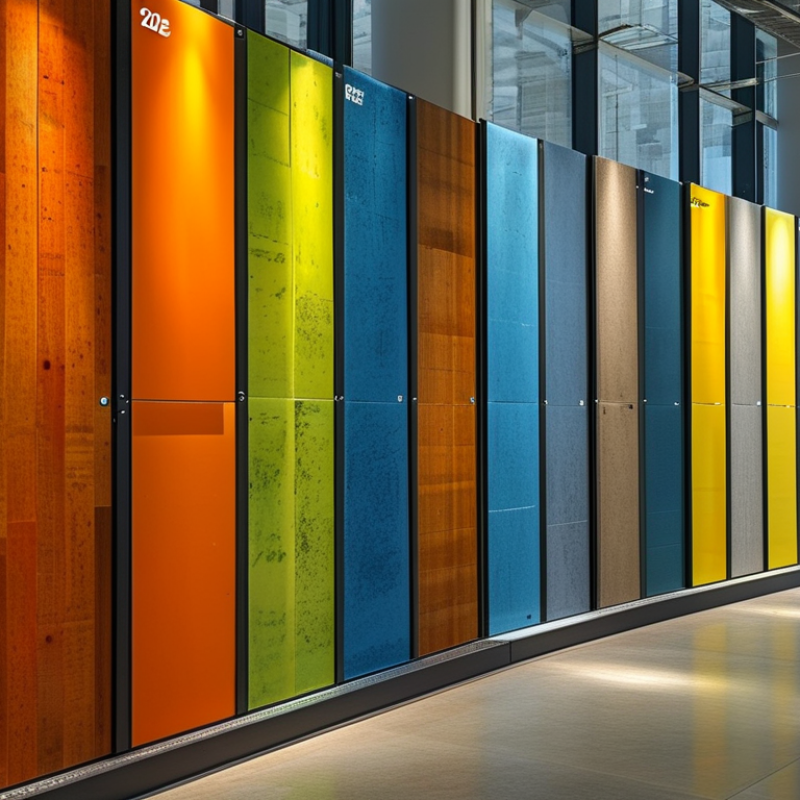
Define Project Requirements and Wall Panel Performance Criteria
Before sourcing wall panels for a global project, define the space, climate, and daily risks. A hospital corridor needs cleanable surfaces and strong impact resistance. A hotel lobby may prioritize appearance, acoustics, and fast installation. Record wall dimensions, substrate conditions, humidity, temperature, and expected traffic. Small details matter.
Set measurable performance criteria before reviewing suppliers. Specify fire reaction, moisture resistance, acoustic absorption, thermal movement, surface durability, and indoor air quality requirements. Confirm which standards and approvals apply in each project location. Ask for current test reports, product data sheets, installation instructions, and material declarations. Documents should match the proposed panel, not a similar model.
Use full-size samples when possible. Check color under daylight, artificial lighting, and shadowed conditions. Test joints, trims, corners, and service penetrations in a mock-up. A panel that looks excellent alone may fail beside a door frame. Confirm tolerances, replacement procedures, packaging, lead times, and storage limits before ordering. Sea freight can expose materials to heat and moisture. Plan inspections at production and delivery stages. Keep records with photos and batch details.
A spreadsheet is not enough. Field experience often reveals problems that specifications miss, such as uneven walls or limited lifting access. Leave room for revision. Requirements may change after the first site inspection, and pretending otherwise creates avoidable risk. Reliable sourcing begins with clear criteria, honest evidence, and practical testing.
How to Source Wall Panels for Global Projects in 2026? - Define Project Requirements and Wall Panel Performance Criteria
| Requirement Dimension | Recommended Project Definition | Target Performance Criteria | Typical Verification Method | Sourcing Data to Request |
|---|---|---|---|---|
| Project Application | Office, hospitality, healthcare, education, retail, residential, transport, or industrial interior | Panel construction and finish must match occupancy, cleaning frequency, traffic level, and maintenance plan | Room data sheet, finish schedule, maintenance review, sample approval | Application area, room types, installation zones, expected service life, replacement strategy |
| Panel Construction | Mineral-fiber, gypsum-based, wood-based, recycled polymer, metal-faced, or composite panel | Core, facing, adhesive, edge treatment, and backing must be compatible with the intended environment | Technical datasheet, material declaration, cross-section sample, factory quality records | Core composition, facing material, recycled content, edge profile, adhesive type, backing system |
| Panel Thickness | Select according to span, acoustic target, impact exposure, weight restrictions, and fixing method | Common interior wall-panel thickness range: 9–25 mm; thicker construction may be required for high impact or acoustic applications | Dimensional inspection and project-specific engineering review | Nominal thickness, tolerance, flatness, weight per square metre, fixing limitations |
| Panel Size and Layout | Coordinate panel dimensions with wall grids, door openings, service penetrations, and shipping limits | Typical modular sizes may range from approximately 600 × 600 mm to 1200 × 3000 mm, subject to material and transport constraints | Shop drawings, cutting schedule, installation mock-up, dimensional tolerance inspection | Manufacturing maximum size, usable size, tolerance, joint width, cutting capability, packing dimensions |
| Fire Performance | Define the legally required reaction-to-fire or fire-resistance classification for each project jurisdiction | For many public interiors, specify a non-combustible or limited-combustibility solution where required; classification must be project and code specific | Relevant EN 13501-1, ASTM E84, or local code test report; assembly testing where applicable | Classification, test orientation, substrate, joint treatment, coating, thickness, report validity, field-of-application limits |
| Acoustic Performance | Set targets for sound absorption, room reverberation, or airborne sound insulation based on room function | Sound absorption target commonly expressed as αw or NRC; use project-specific calculations rather than appearance-based assumptions | ISO 354, ISO 11654, ASTM C423, ISO 10140, or equivalent project-approved method | Test mounting, air gap, acoustic rating, frequency data, backing details, edge conditions |
| Thermal Performance | Consider thermal resistance only when panels form part of an insulated wall or affect energy calculations | Report declared thermal conductivity and thermal resistance for the complete build-up, including cavity and substrate where relevant | ISO 8301, ISO 12667, ASTM C518, or equivalent laboratory method | Thermal conductivity, R-value, test temperature, moisture condition, density, complete wall assembly data |
| Moisture Resistance | Classify the location as dry, intermittent humidity, wet cleaning area, or high-moisture environment | Use moisture-resistant construction in washrooms, changing rooms, kitchens, healthcare wet zones, and humid climates; do not rely on coating alone | Water absorption, humidity cycling, dimensional stability, and project-specific exposure testing | Water absorption, humidity range, edge sealing, backing protection, allowable cleaning method, warranty conditions |
| Impact and Abuse Resistance | Define exposure as light traffic, public circulation, trolley use, sports activity, or heavy industrial contact | Panel and fixing system should resist indentation, cracking, edge damage, and detachment under foreseeable impact | Pendulum impact, hard-body impact, soft-body impact, or local project specification testing | Impact class, test energy, substrate, fixing spacing, repairability, spare-panel requirement |
| Surface Durability | Match finish durability with cleaning chemicals, abrasion frequency, UV exposure, and touch-point intensity | Surface should maintain color, adhesion, texture, and gloss after specified cleaning and abrasion cycles | Wet-scrub, abrasion, stain, chemical-resistance, adhesion, and lightfastness testing | Cleaning agents, scrub cycles, stain list, gloss change, color change, UV exposure, repair procedure |
| Hygiene and Indoor Air Quality | Prioritize low-emission materials and cleanable surfaces for healthcare, education, hospitality, and residential interiors | Specify low emissions of volatile organic compounds and non-porous or cleanable surfaces where hygiene is critical | ISO 16000 series, EN 16516, ASTM D5116, or recognized indoor-air-quality certification criteria | VOC test results, formaldehyde emissions, antimicrobial claims with test basis, cleaning instructions, ingredient disclosure |
| Dimensional Stability | Account for temperature, relative humidity, acclimatization, and long-distance transport conditions | Declare dimensional change under relevant humidity and temperature cycles; joints must accommodate expected movement | Humidity cycling, thermal cycling, flatness, squareness, and edge straightness measurements | Allowable movement, acclimatization time, storage conditions, installation temperature and humidity limits |
| Weight and Structural Load | Check wall substrate, ceiling or secondary framing capacity, lifting requirements, and local labor limitations | Typical interior panel weights may range from approximately 5–25 kg/m², depending on material and thickness | Mass measurement, fixing pull-out test, substrate assessment, structural calculation | Panel mass, system mass, fixing loads, allowable span, lifting method, maximum package weight |
| Fixing and Installation | Choose adhesive, mechanical, concealed clip, rail, or hybrid installation according to substrate and access requirements | Installation must allow alignment, movement tolerance, service access, safe replacement, and compatible substrate preparation | Full-scale mock-up, installation manual review, pull-off or pull-out testing, site inspection | Fixing layout, substrate tolerance, compatible accessories, tools, labor skill level, installation sequence |
| Sustainability and Circularity | Set measurable requirements for recycled content, responsible sourcing, durability, disassembly, and end-of-life recovery | Prefer documented environmental data and mechanically demountable systems where future reuse or recycling is a project objective | ISO 14025 environmental product declaration, EN 15804 life-cycle data, chain-of-custody evidence | Product carbon footprint, recycled content, material sourcing, packaging content, take-back or recycling pathway |
| Color and Appearance Control | Define approved color, gloss, texture, perforation pattern, grain direction, joint alignment, and acceptable variation | Appearance must remain consistent across production batches, replacement panels, and project phases | Physical sample approval, master sample, color measurement, batch inspection, installed mock-up | Color tolerance, gloss level, texture reference, sample retention period, batch identification method |
| Logistics and Global Supply | Plan around production capacity, export packaging, customs documentation, transit time, port conditions, and local installation timing | Packaging should protect against abrasion, moisture, edge damage, deformation, and mixed-batch delivery | Packaging inspection, container loading plan, moisture protection review, delivery quality check | Lead time, minimum order quantity, monthly capacity, package dimensions, gross weight, export documents, spare quantity |
| Quality Assurance | Require documented controls from raw material intake through production, packing, shipment, and site delivery | Product characteristics, tolerances, batch traceability, and non-conformance procedures must be defined before purchase | Factory inspection, pre-shipment inspection, sample testing, inspection and test plan | Quality plan, inspection frequency, acceptance criteria, batch records, corrective-action process, traceability code |
| Compliance Documentation | Align documentation with the destination country, building code, green-building requirements, and contract conditions | All claims must be supported by current, product-specific, traceable evidence rather than generic material statements | Document review by architect, code consultant, fire engineer, acoustician, and sustainability assessor | Datasheets, test reports, safety data, declarations of performance, environmental declarations, installation manuals, warranties |