Why Choose Wood Exterior Doors for Your Home?

Choosing the right entry door affects more than curb appeal. It influences comfort, security, energy use, and the first impression of your home. Wood exterior doors remain popular because they offer natural warmth, strong visual character, and remarkable design flexibility. Oak, mahogany, cedar, and other species can create very different appearances, from smooth modern panels to detailed traditional joinery.

“Your front door is the handshake of the house,” architect Sarah Susanka has said. That idea explains why materials matter. A solid wood door feels substantial when it opens, shows authentic grain near the handle, and can make a plain façade feel more welcoming. Experienced builders also value wood because it can be repaired, refinished, and customized more easily than many manufactured alternatives.

Still, wood is not maintenance-free. That matters. Seasonal moisture can cause swelling, shrinking, or finish failure, especially around the lower edge and exposed joints. A properly sealed door, a sheltered entryway, quality weatherstripping, and regular inspections can reduce these problems. Yet even careful owners may notice small cracks or fading over time. That is not necessarily a defect; it is part of the material’s behavior.

This guide examines why wood exterior doors continue to earn homeowner trust. It considers appearance, insulation, durability, customization, maintenance, and long-term value. The best choice depends on your climate, budget, entryway exposure, and willingness to care for the surface. Beautiful wood deserves honest expectations.

Why Choose Wood Exterior Doors for Your Home?

Wood Exterior Doors: Definition, Structure, and Common Materials

Wood exterior doors are entrance assemblies made for outdoor exposure, not merely thick wooden slabs. Their structure usually includes vertical stiles, horizontal rails, panels, a threshold, weatherstripping, and protective glazing when needed. Solid oak, mahogany, pine, and fir remain common materials. Engineered wood is also widely used because bonded layers can reduce warping. A veneer may provide the visible grain, while a reinforced core improves stability and security.

Material choice affects comfort. The USDA Forest Products Laboratory’s Wood Handbook reports wood’s thermal conductivity at roughly 0.10–0.20 W/m·K, depending on species and moisture content. That relatively low conductivity helps limit heat transfer through the door leaf.

However, the complete assembly matters more than the timber alone. The U.S. Department of Energy advises checking a door’s air leakage, insulation, glazing, and weatherstripping performance. Small gaps around a threshold can defeat attractive woodwork.

Wood also offers repairable surfaces and distinctive grain that synthetic finishes often imitate imperfectly. In practical installations, I have seen a carefully sealed door remain stable for years, while an exposed, poorly finished one absorbs rain quickly. That is the weakness. USDA guidance emphasizes moisture control, because changing moisture content causes wood to swell and shrink. A roofed entry, sealed edges, durable exterior coating, and routine inspection are therefore essential. A wood exterior door can feel warm and substantial, but it demands responsible maintenance.

Key Benefits of Choosing Wood for Exterior Entry Doors

Wood exterior doors bring warmth that steel and fiberglass often struggle to imitate. The grain feels natural under your hand, while deep stains can complement brick, stone, or painted siding. More importantly, wood can support strong thermal performance when properly designed. The U.S. Department of Agriculture’s Wood Handbook reports that wood’s thermal conductivity varies with species and moisture, but remains relatively low compared with many construction metals. A dense, well-sealed door can therefore help reduce drafts around an entryway.

Details matter more than appearance. Choose a door with weather-resistant joinery, quality glazing, and adjustable hinges. The U.S. Department of Energy recommends careful air sealing around doors because uncontrolled gaps increase energy loss. A professional installer should check the threshold, frame, and wall connection, not only the slab. You may notice a colder floor near a poorly fitted entrance. That is useful evidence, not just a cosmetic issue.

Wood also offers repairability. Scratches, faded finish, and minor edge damage can often be sanded or refinished instead of replaced. However, wood is not maintenance-free. The National Wood Flooring Association and USDA guidance both emphasize moisture control as a key factor in wood durability. Inspect the lower corners each season, especially after heavy rain. I once underestimated that small habit. Neglecting it can allow swelling, peeling, or decay to develop behind an attractive finish. Airtight construction, proper overhangs, and periodic refinishing make wood a more dependable exterior choice.

Why Choose Wood Exterior Doors for Your Home?

Wood has a much lower thermal conductivity than common metal door materials, helping reduce heat transfer through the door surface. Its natural appearance, repairability, and design flexibility also make it a practical choice for exterior entry doors.

Approximate thermal conductivity values at room temperature. Lower values indicate better resistance to heat transfer. Actual door performance depends on thickness, construction, glazing, weatherstripping, and installation quality.

Styles, Designs, and Customization Options for Wood Doors

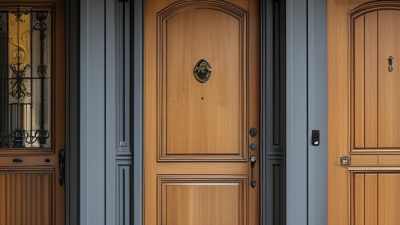
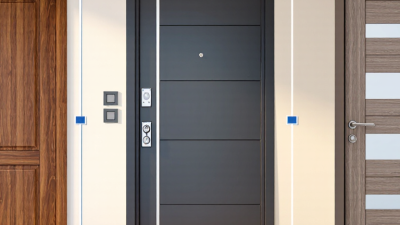
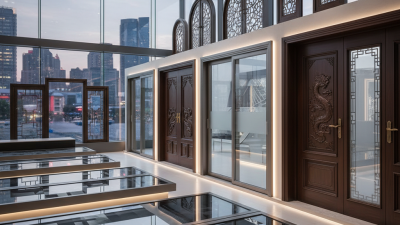
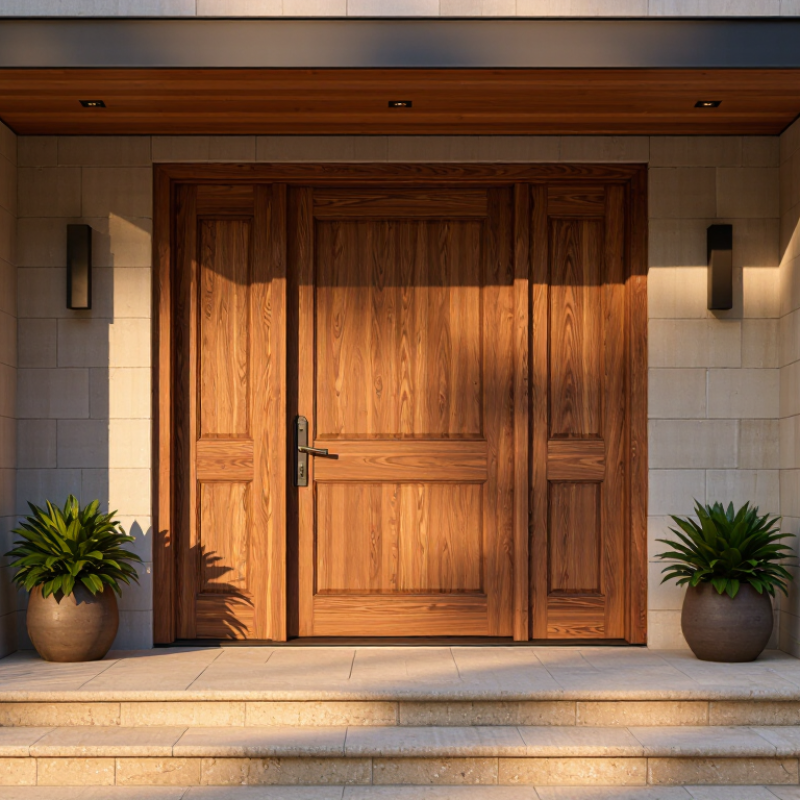
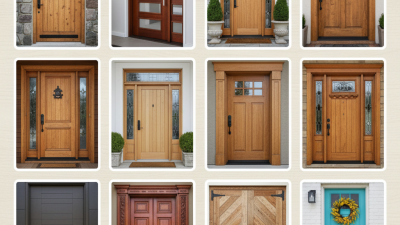
Wood exterior doors bring warmth, texture, and lasting character to a home’s entrance. Traditional panel doors suit brick houses and older architecture. Clean, flush designs feel natural on modern homes. Craftsman doors often feature square glass panes, visible joinery, and strong horizontal lines. Arched doors create a softer, more decorative impression. Small details matter. A deep blue finish can make pale stone feel brighter, while natural oak highlights grain beneath a clear protective coat.

Customization allows homeowners to match the door with daily routines and local conditions. Choose insulated glass for comfort, privacy glass for bathrooms nearby, or narrow vertical panes for extra daylight. Hardware should balance appearance and use. A long pull handle feels contemporary, while a knocker adds traditional character. Threshold height, swing direction, and accessible clearance also deserve careful planning. These practical choices are easy to overlook.

Wood species affect both appearance and maintenance. Stable hardwoods resist movement better in changing weather, but every wooden door needs protection from moisture and sunlight. I once underestimated afternoon exposure; a beautiful dark stain faded unevenly within a few seasons. A covered entry, quality sealant, and regular inspections would have helped. That experience changed how I evaluate door designs. A dramatic finish may look perfect in a showroom, yet a lighter color can age more gracefully on a sunny façade. Door samples should be viewed outdoors, not only under indoor lighting.

How Wood Exterior Doors Perform in Different Weather Conditions

Wood exterior doors can perform well in changing weather, but their performance depends on preparation and maintenance. In my experience, a properly sealed door handles rain better than an untreated one. Dense wood resists daily wear, while flexible construction helps manage small seasonal movements. However, wood absorbs moisture. It may swell during humid summers and shrink in dry winter air.

Sunlight creates another challenge. Strong ultraviolet rays can fade finishes and dry the surface around exposed panels. Cold weather may also reveal weak installation. Small gaps can let drafts enter, especially near the threshold. A professional installer checks the frame, drainage, hinges, and weatherstripping before finishing the job. That detail matters more than appearance alone. Wood doors are durable, but they are not maintenance-free.

Tips: Inspect the lower edge after heavy rain. Recoat exposed surfaces when the finish looks thin or dull. Keep gutters clear above the entrance. Use weatherstripping that compresses evenly without blocking the latch. In coastal or very humid areas, inspect more often. A north-facing door may age differently from one receiving afternoon sun. I once underestimated that difference. The sheltered side stayed smooth, while the sunny side developed fine cracks. Choosing the right finish for local conditions is essential, though even good advice cannot replace regular inspection.

Maintenance, Security, and Long-Term Value Considerations

Why Choose Wood Exterior Doors for Your Home?

Wood exterior doors offer warmth, repairability, and strong visual character. They also demand honest maintenance. The USDA Forest Products Laboratory’s Wood Handbook notes that fungal decay is unlikely when wood moisture remains below 20%. In practice, I check the lower edge, jambs, and threshold after heavy rain. Peeling finish, soft fibers, or dark staining should not be ignored. Recoat exposed surfaces before moisture travels deeper. Maintenance is not difficult, but it is easy to postpone.

Security depends on the complete entry system, not wood alone. Choose a solid-core door, a reinforced frame, long screws, and a properly fitted deadbolt. The 2022 Cost vs. Value Report found that entry-door replacement can recover substantial project costs, although its strongest figures applied to steel doors. That comparison is useful, but it does not guarantee a wooden door’s resale return. Local climate, craftsmanship, and neighborhood expectations matter more than many homeowners expect. A beautiful door can still perform poorly when installed out of square.

Tips: Seal all six door faces, including the top and bottom edges. Inspect finish every spring. Use a peephole or certified camera without weakening the door. Ask the installer about water drainage and air leakage testing. The ENERGY STAR Residential New Construction program emphasizes tested installation, yet field workmanship remains inconsistent. I have seen expensive doors fail because the threshold was poorly sealed. That detail deserves more attention.

Go to Top