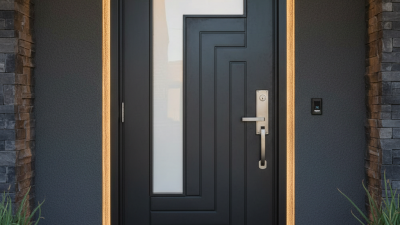
Choosing steel front doors in 2026 requires more than comparing finishes, prices, and catalog photographs. Global buyers must examine security ratings, thermal performance, corrosion resistance, installation details, and after-sales support. A door can look impressive in a showroom, yet perform poorly beside a wet coastline or a freezing warehouse entrance.
Steel-door engineer David Watkins offers a practical warning: “A strong door is only as reliable as its frame, hardware, and installation.” That principle guides this review. The best steel front doors should combine reinforced construction with accurate dimensions, dependable hinges, weather-sealed thresholds, and tested locking systems. Small details matter. A three-millimeter gap can become a draft, a rattle, or a water path.
This guide compares leading options for residential, commercial, and architectural projects across different climates. It considers galvanized steel, powder-coated surfaces, insulated cores, glass configurations, customization, and expected maintenance. Buyers in humid regions may prioritize zinc protection and drainage. Buyers in colder markets may need thermal breaks and low-conductivity cores. The right choice is rarely the most expensive model.
Some product claims still deserve careful questioning. “Heavy-duty” does not always mean secure. A thicker panel may also increase weight and installation demands. Certification language can vary between markets, creating confusion for international purchasers. This review therefore focuses on verifiable specifications, supplier experience, and practical ownership concerns. The goal is simple: help buyers choose a front door that remains stable, attractive, and dependable after the showroom shine fades.
What Defines a High-Quality Steel Front Door in 2026
A high-quality steel front door begins with stable construction, not impressive appearance alone. Galvanized steel resists moisture, while a reinforced core helps prevent warping and dents. The door should close evenly, without scraping the threshold. That small detail matters.
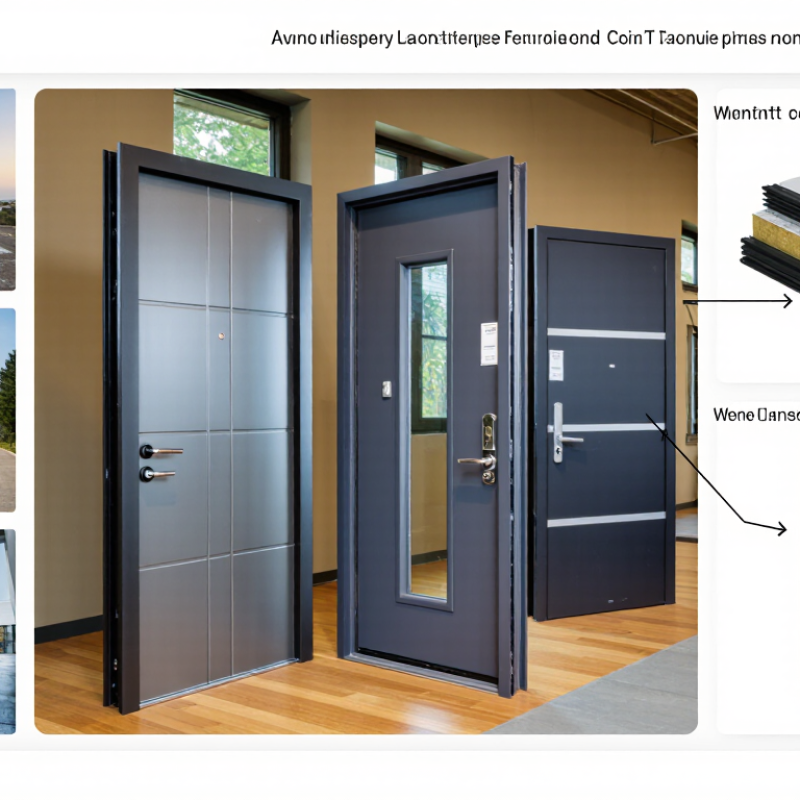
Energy performance is equally important for global buyers. Look for a thermally broken frame, insulated panels, and continuous weather seals around all four sides. In practical inspections, a weak threshold often causes drafts and water entry. Quality hinges, adjustable hardware, and a tested multipoint locking system also improve daily performance. Buyers should request documented testing for air leakage, water resistance, wind pressure, and thermal values. Clear technical documents are more reliable than vague claims.
Finish quality deserves close attention. A durable powder-coated surface should appear even, with no thin corners, bubbles, or exposed steel near the hinges. Stainless or corrosion-resistant fittings suit humid coastal climates better than ordinary hardware. Glass inserts should use properly rated safety glazing and secure compression seals. However, heavier does not always mean better. Excess weight can stress hinges and complicate installation. I have seen excellent doors perform poorly because the wall opening was measured incorrectly. Even the best product needs trained installation, correct drainage, and regular seal inspection. No door is perfect. A careful buyer should examine the whole system, not just the steel panel.
2026 Top Steel Front Doors for Global Buyers
Steel front doors now serve different demands, not one universal purpose. Insulated steel doors suit apartments, villas, and energy-conscious commercial buildings. Their foam cores reduce heat transfer, while galvanized skins resist moisture and daily impact. According to the U.S. Department of Energy, doors and windows can account for about 25% of household heating and cooling energy use. This makes thermal performance a purchasing factor, not decoration.
Fire-rated steel doors fit hotels, hospitals, factories, and stairwell entrances. They are tested assemblies, often rated from 20 minutes to three hours under local standards. NFPA 80 remains a major reference for fire door installation and maintenance in North America. Hollow metal doors work well in schools, warehouses, and service corridors because they tolerate frequent opening. Security steel doors add reinforced cores, multi-point locks, and narrow vision panels for offices and residential entrances. Glazed versions improve daylight, but large glass areas can weaken privacy and thermal control.
Tips: Check the complete door assembly, not only the steel sheet. Ask for test reports, U-values, corrosion protection, hardware compatibility, and installation drawings. Regional requirements vary. A door approved for one market may need different certification elsewhere. Research from Grand View Research places the global doors market in strong long-term growth, yet steel demand differs sharply by climate and building type. That forecast helps, but it cannot replace site inspection. I have seen attractive doors fail early because threshold drainage was overlooked. A small detail.
| Steel Front Door Type | Typical Construction | Common Materials and Finishes | Typical Performance Features | Main Applications | Key Buying Considerations | Relative Cost Level |
|---|---|---|---|---|---|---|
| Insulated Steel Exterior Door | Steel skins over a mineral wool, polyurethane, or expanded-polystyrene core; commonly supplied as a single or double-leaf door. | Galvanized or galvannealed steel; polyester powder coating, baked enamel, or weather-resistant paint. | Improved thermal insulation, weather resistance, dimensional stability, and everyday security. | Residential entrances, apartment buildings, offices, schools, clinics, hotels, and general commercial buildings. | Check thermal transmittance, frame design, drainage, weather seals, hinge quality, and local wind-load requirements. | Medium |
| Thermally Broken Steel Door | Steel door leaf and frame incorporating a low-conductivity separator to reduce heat transfer between the interior and exterior. | Galvanized steel, stainless-steel components, insulated cores, and durable powder-coated finishes. | Reduced thermal bridging, better condensation control, improved energy efficiency, and greater indoor comfort. | Cold climates, energy-efficient homes, passive-building projects, office façades, and conditioned commercial spaces. | Confirm whole-door U-value, threshold design, air leakage, water penetration, and compatibility with the building envelope. | Medium to High |
| Steel Security Door | Reinforced steel leaf with stiffeners, multi-point locking, security hinges, anti-pry features, and a reinforced frame. | Medium- to heavy-gauge galvanized steel; powder coating, textured coating, or protective laminate finish. | Enhanced resistance to forced entry, impact, tampering, and unauthorized access. | Private residences, secure apartments, data rooms, utility buildings, storage areas, and controlled-access facilities. | Review the complete door-set certification, lock cylinder protection, frame anchoring, hinge-side protection, and emergency egress requirements. | Medium to High |
| Fire-Rated Steel Door | Steel leaf with a tested fire-resistant core, steel frame, fire-rated hinges, closer, latch, and approved glazing where applicable. | Galvanized or primed steel with fire-rated hardware and, when permitted, certified fire-resistant vision panels. | Common tested ratings include 20, 45, 60, 90, and 120 minutes, depending on the complete door assembly and local code. | Stairwells, corridors, plant rooms, electrical rooms, kitchens, warehouses, hospitals, schools, and multi-family buildings. | Fire rating applies to the complete tested assembly; verify smoke control, self-closing, signage, hardware, frame, and wall compatibility. | Medium to High |
| Stainless-Steel Front Door | Stainless-steel leaf and frame, often with an insulated core and concealed or heavy-duty hardware. | Common grades include 304 for general environments and 316 for higher chloride or coastal exposure; brushed, satin, or polished finish. | High corrosion resistance, hygienic surface, good cleanability, and premium appearance. | Coastal buildings, food-processing areas, healthcare facilities, laboratories, hotels, high-end residences, and public entrances. | Select the steel grade according to chloride exposure; specify surface finish, weld quality, galvanic compatibility, and cleaning procedures. | High |
| Galvanized Steel Front Door | Steel door and frame protected with a zinc coating before or after fabrication, usually with an insulated or reinforced core. | Hot-dip galvanized or electro-galvanized steel with powder coating, paint, or other compatible protective finish. | Good resistance to rust and humidity when coating integrity is maintained; suitable for many exterior environments. | Residential developments, commercial buildings, workshops, warehouses, schools, and humid inland regions. | Inspect coating thickness, cut-edge protection, weld treatment, drainage, salt exposure, and compatibility between zinc coating and paint system. | Low to Medium |
| Glazed Steel Front Door | Steel door leaf containing one or more vision panels using laminated, tempered, insulated, or fire-rated glass as required. | Galvanized or stainless steel with safety glass, insulated glass units, or certified fire-resistant glazing. | Natural light and visibility combined with steel strength; performance depends strongly on the selected glass and glazing system. | Retail entrances, offices, schools, hospitals, hospitality facilities, apartment lobbies, and public buildings. | Confirm safety-glazing classification, thermal performance, security level, glass-to-frame compatibility, and fire-rating limitations. | Medium to High |
| Acoustic Steel Door | Heavy, tightly sealed steel leaf with acoustic core, perimeter seals, drop seal, and acoustically designed frame components. | Painted or powder-coated steel; mineral wool or composite acoustic core; compression seals and automatic drop seals. | Improved airborne sound reduction; tested performance is commonly expressed as an Rw or STC value for the complete door set. | Music rooms, studios, cinemas, meeting rooms, hotels, plant rooms, generators, and noisy industrial areas. | Request tested laboratory data for the complete assembly; gaps, thresholds, seals, and surrounding walls can reduce real-world performance. | High |
| Blast-Resistant Steel Door | Heavy reinforced steel leaf and frame engineered to resist specified pressure and impulse loads; usually custom-designed for the project. | Heavy-gauge steel, reinforced frames, specialized locks, structural anchors, and protective industrial coatings. | Resistance to defined blast overpressure and impulse levels when installed as a tested or engineered assembly. | Critical infrastructure, industrial plants, energy facilities, defense-related sites, chemical facilities, and high-security compounds. | Requires a project-specific hazard assessment, engineered anchorage, pressure criteria, blast direction, certification, and installation control. | Very High |
| Bullet-Resistant Steel Door | Steel door construction combined with ballistic steel, aramid, ceramic, or other tested protective materials. | Ballistic-grade steel or composite protection with controlled surface finish and compatible ballistic glazing when required. | Protection is classified by the ammunition, weapon type, impact pattern, and test standard rather than by steel thickness alone. | Banks, secure government areas, cash-handling rooms, security checkpoints, critical infrastructure, and protected residential entrances. | Specify the required threat level, complete door-set test evidence, frame and hardware protection, weight limits, and installation method. | Very High |
| Industrial Hollow-Metal Door | Commercial steel leaf, often honeycomb or insulated, installed in a welded or knock-down hollow-metal frame. | Cold-rolled, galvanized, or galvannealed steel with primer, enamel, or powder coating. | Durable, repairable, and suitable for frequent use; fire, security, and acoustic performance depend on the specified assembly. | Factories, logistics centers, workshops, warehouses, schools, hospitals, offices, and service corridors. | Choose door gauge, frame type, duty cycle, hinge count, closer strength, threshold, and hardware based on traffic and abuse level. | Low to Medium |
| Double-Leaf Steel Entrance Door | Two coordinated steel leaves with an active leaf, inactive leaf, astragal or meeting stile, and suitable coordination hardware. | Insulated galvanized steel, stainless steel, or reinforced painted steel; optional glazing and panic hardware. | Provides a wider clear opening for people, equipment, furniture, and emergency movement. | Building lobbies, schools, hospitals, warehouses, factories, public facilities, and commercial entrances. | Confirm clear opening, leaf coordination, accessibility, wind pressure, threshold design, panic exit requirements, and delivery access. | Medium to High |
| Steel Door with Panic or Exit Hardware | Steel door assembly fitted with a panic exit device or emergency exit device designed for rapid egress. | Insulated or reinforced steel leaf, galvanized frame, exit device, closer, latch, and optional fire-rated components. | Supports quick evacuation and controlled re-entry when configured according to applicable safety regulations. | Schools, offices, shopping centers, cinemas, factories, warehouses, healthcare buildings, and public venues. | Verify occupant load, exit direction, accessibility, local code, fire-rating requirements, hardware certification, and maintenance access. | Medium |
| Marine or Coastal Steel Door | Corrosion-controlled steel construction with sealed edges, durable hardware, drainage details, and an appropriate protective coating system. | 316 stainless steel or specially protected galvanized steel; marine-grade coatings and corrosion-resistant fasteners. | Improved resistance to salt spray, humidity, wind-driven rain, and aggressive coastal conditions. | Coastal residences, ports, marine buildings, waterfront hotels, offshore support facilities, and humid tropical projects. | Consider salt-spray exposure, crevice corrosion, dissimilar-metal contact, coating system, drainage, and regular maintenance requirements. | High |
For global buyers in 2026, a steel front door should protect more than the entryway. Its security begins with a reinforced frame, multi-point locking, tamper-resistant hinges, and strong anchor bolts. The door should close evenly, without scraping or leaving visible gaps. Small gaps matter.
During site inspections, I check the threshold first. A low, sealed threshold helps block wind-driven rain and dust. Look for corrosion-resistant steel, durable powder coating, and sealed edges around the glazing. In coastal areas, salt exposure can damage weak finishes quickly. Cold regions need insulated cores and thermal breaks to reduce indoor heat loss. Hot climates benefit from reflective finishes and carefully selected glass.
Energy performance depends on the complete door system, not the steel panel alone. Ask for documented U-value, air-leakage, and water-resistance test results from an independent laboratory. Ratings should match the local climate and installation method. A certified product can still perform poorly when the frame is fitted unevenly. That part is often underestimated.
For stronger security, inspect lock alignment after installation and test the weather seals by hand. They should compress gently and recover their shape. Heavy doors also require precise hinges and a properly supported wall. One honest limitation remains: no front door is maintenance-free. Check seals, coating, drainage holes, and hardware each year, especially after storms or freezing weather.
2026 Top Steel Front Doors for Global Buyers?
A reliable comparison starts with the door specification, not the catalogue image. Steel grades, sheet thickness, core density, thermal breaks, glazing, and hardware can change performance sharply. The World Steel Association reported 1.88 billion tonnes of crude steel production in 2024, showing the scale of this supply market. Yet volume does not prove quality. Ask suppliers for mill certificates, coating details, weld inspection records, and tested U-values. A real sample should show clean corners, even seams, and a stable frame. Small defects matter.
Certifications need careful checking. ISO 9001 supports quality management, while ISO 14001 addresses environmental systems. These certificates describe factory processes, not automatic door performance. For fire, smoke, security, wind, or weather resistance, request test reports matching the exact model and configuration. Relevant standards may include EN 16034, EN 14351-1, ASTM methods, or local equivalents. The IEA estimates steel production creates roughly 7% of global energy-related emissions, so recycled content and production methods deserve practical questions. The answer may be incomplete.
Tips: Compare three written quotations using identical dimensions and specifications. Separate EXW, FOB, CIF, installation, packaging, and after-sales costs. Check whether glazing, locks, thresholds, taxes, and replacement parts are included. Ask for delivery history to your region, not vague “global experience.” A low price can hide thinner steel, basic seals, or weak packaging. I would also inspect one delivered unit before approving a large order. That step feels slow. It often prevents expensive surprises.
Indicative comparison of commonly specified steel front-door constructions, using typical steel face-sheet thickness and export price benchmarks. Actual specifications and prices vary by size, hardware, finish, order volume, destination, and testing requirements.
Global buyers should verify steel grade and thickness, core insulation, corrosion protection, weld quality, test reports, and applicable certifications. Common references include EN 1627 for burglar-resistance classes, EN 1634-1 or UL 10C for fire-door testing, NFPA 80 for installation and maintenance, and ISO 9001 for quality-management systems. Prices shown are indicative USD export benchmarks and exclude freight, duties, installation, and certification costs.
For global buyers choosing a steel front door in 2026, installation deserves more attention than decorative finish. A strong slab can still underperform when the frame sits out of square. Measure the opening at three points. Check the sill for level. Leave room for controlled shimming, not force. The U.S. Department of Energy’s Building America Solution Center identifies air sealing around rough openings as a key efficiency measure. DOE guidance indicates air leakage can add substantially to heating and cooling loads, sometimes reaching 30% of energy use in homes.
Long-term performance also depends on climate. In coastal air, inspect fasteners, welds, and the lower edge for corrosion every six months. In cold regions, check weatherstripping after the first winter. In wet climates, keep drainage paths clear and repaint damaged surfaces promptly.
NFRC rating data helps buyers compare U-factor and air leakage. However, the label cannot rescue poor installation. That distinction is often missed.
Maintenance should be practical: lubricate hinges and locks with the approved product, tighten loose hardware, and replace compressed seals. Avoid abrasive cleaners; they can dull protective coatings.
UNEP’s 2024 Global Status Report for Buildings and Construction reported that buildings consumed 32% of global energy and produced 34% of global carbon dioxide emissions in 2022. A better-sealed entrance supports that wider efficiency goal. Its effect remains modest beside walls, roofs, and mechanical systems. I would not promise maintenance-free ownership. Even quality steel can dent, rust, or shift when drainage and alignment are neglected.