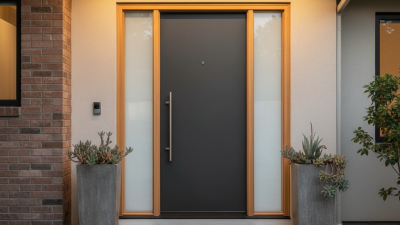
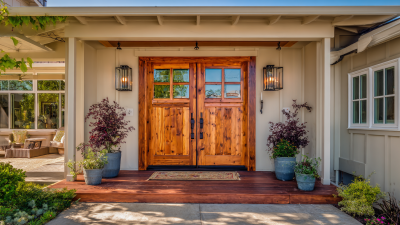
Choosing the right home doors for a target market requires more than selecting an attractive finish. The door must respond to local climate, building habits, security expectations, and daily family routines. A coastal market may need corrosion-resistant hardware and stable composite materials. A cold region may prioritize thermal insulation, weather seals, and low-maintenance frames. In dense urban areas, sound reduction and reinforced locks can matter more than decorative glass.
Bob Vila, a respected home improvement expert, has described the front door as “the focal point of a home’s exterior.” That observation remains commercially important. A door creates the first visual impression, yet it must also perform quietly through thousands of openings. Buyers notice a weak hinge, a draft beneath the threshold, or a finish that fades after one summer. Small failures become expensive reputational problems.
Market research should combine showroom feedback, installer experience, warranty records, and local construction data. Home doors that sell well in one country may feel unsuitable elsewhere. Swing direction, panel proportions, colors, and handles can reflect regional preferences. Accessibility also deserves attention, including clear openings, manageable operating force, and safe thresholds. No checklist is perfect. Even experienced suppliers can misjudge a trend or overvalue appearance.
The strongest selection process tests real samples under realistic conditions. Open the door repeatedly. Expose finishes to moisture and sunlight. Ask installers what causes callbacks. Compare the full lifecycle cost, not only the purchase price. This guide explores those decisions, helping manufacturers, distributors, and builders match home doors with genuine market needs.
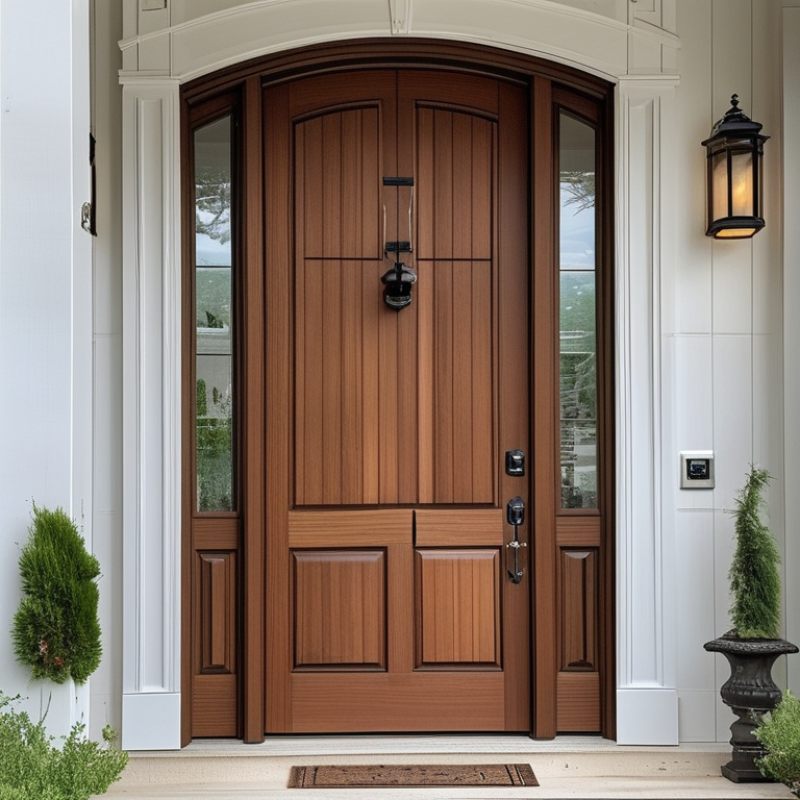
How to Choose the Right Home Doors for Your Market?
Define Your Target Market and Customer Needs
A successful door strategy starts with people, not product specifications. Identify who buys in your market: young families, landlords, retirees, or luxury homeowners. Each group values different details. Families may prioritize safety, durability, and easy cleaning. Older buyers may need wider openings, low thresholds, and lever handles. Landlords often focus on replacement speed and long service life.
Local climate also shapes demand. In hot regions, buyers may seek insulated doors that reduce indoor heat. In colder areas, weather sealing and thermal performance matter more. The U.S. Department of Energy identifies air leakage as a major source of household energy loss. Meanwhile, the National Association of Home Builders reported in its 2024 buyer preferences study that 79% of buyers rated energy-efficient windows highly. Doors should support that expectation, although windows receive more attention in many sales discussions.
Tips: Interview ten local homeowners before choosing your main door range. Ask what failed, what felt unsafe, and what they would change. Review contractor feedback, climate data, and common building styles. Do not assume premium finishes guarantee demand. In one market, a simple fiberglass door may outperform an expensive timber design because maintenance worries are stronger. That assumption can still be wrong, so test a small selection before scaling.
Define your target market by comparing the door features that matter most to different customer groups. The index uses a 0–100 planning scale, where higher values indicate stronger customer priority.
Use this benchmark to adapt product selection, pricing, and messaging. Security and energy efficiency are typically core needs, while accessibility and design become more important for specific customer segments.
Choosing home doors for a target market requires more than matching colors. Material affects durability, maintenance, insulation, and price. Fiberglass resists moisture and dents, while steel usually offers strong security and cost control. Wood provides warmth and authentic detail, but it needs careful sealing in wet climates. Glass-heavy styles can improve daylight, yet they may increase heat gain without suitable coatings.
The International Energy Agency’s 2023 Global Status Report states that buildings consume about 30% of global final energy. Door performance therefore deserves serious attention. Use NFRC labels to compare U-factor, solar heat gain coefficient, and visible transmittance. Lower U-factor generally means better insulation. However, a low number alone does not guarantee comfort. Poor installation can leave gaps around the frame. That part is often underestimated.
Tips: Match the door to local weather first. Specify corrosion-resistant hardware near coasts. Choose insulated cores for cold regions. Test swing clearance in compact homes. For busy entrances, verify cycle ratings and threshold drainage. Compare style only after checking these performance details. A dramatic glass panel may sell well, but it can create glare and privacy concerns. In practice, the “best” door is sometimes less attractive than expected, but more dependable for the homeowner.
Compare Door Materials, Styles, and Performance Features
| Door Material | Best-Fit Market | Common Styles | Typical Service Life | Thermal Performance | Moisture Resistance | Maintenance | Security Potential | Relative Cost | Key Consideration |
|---|---|---|---|---|---|---|---|---|---|
| Fiberglass | Mixed climates, coastal areas, and low-maintenance housing | Panel, flush, wood-grain, and glazed entry doors | 20–40 years | Good to very good | Very good | Low | Good with reinforced construction | $$–$$$ | A strong balance of appearance, energy efficiency, durability, and price. |
| Insulated Steel | Value-focused projects, cooler climates, and high-security applications | Flush, panel, contemporary, and fire-rated doors | 15–30 years | Good when foam-filled | Good if properly coated | Low to moderate | Very good | $–$$ | Offers high stiffness and impact resistance, but exposed scratches can lead to corrosion. |
| Solid Wood | Premium homes, traditional architecture, and renovation projects | Craftsman, carved panel, double, arched, and pivot doors | 20–60 years with care | Moderate | Moderate; finish is critical | High | Good with a strong frame and lockset | $$$–$$$$ | Provides authentic character, but can swell, shrink, or warp if moisture is not controlled. |
| Engineered Wood | Premium and mid-range homes seeking a wood appearance with improved stability | Panel, shaker, glazed, and modern wood-look doors | 20–40 years | Moderate to good | Good with sealed edges | Moderate | Good | $$–$$$ | More dimensionally stable than many solid-wood doors, while retaining a natural finish option. |
| Aluminum | Modern homes, warm climates, and large glazed openings | Sliding, folding, pivot, narrow-stile, and glass-panel doors | 20–40 years | Moderate; thermal breaks improve it | Very good | Low | Good with laminated or tempered glazing | $$$–$$$$ | Lightweight and corrosion-resistant, but standard aluminum can conduct heat readily. |
| uPVC / Vinyl | Moist or coastal regions and budget-conscious replacement projects | Sliding, patio, glazed, and simple panel doors | 15–30 years | Good | Very good | Very low | Moderate; reinforced frames improve strength | $–$$ | Resists rot and corrosion, but color, stiffness, and hardware quality vary by construction. |
| Glass-Integrated | Contemporary homes, daylight-focused designs, and indoor-outdoor living areas | Sliding, folding, French, pivot, and full-height glazed doors | 15–30 years | Good with insulated low-emissivity glazing | Good with correct seals and drainage | Low to moderate | Good with laminated safety glass and quality locks | $$$–$$$$ | Glazing type, frame quality, solar-control performance, and installation have a major effect on results. |
How to Choose the Right Home Doors for Your Market?
Climate should guide door selection before appearance. In humid coastal areas, choose fiberglass or treated composite doors with corrosion-resistant hardware. Their sealed cores resist swelling after repeated rain. In cold regions, prioritize low U-values, insulated cores, and continuous weatherstripping. In hot climates, reflective finishes and shaded entrances can reduce solar heat gain. The 2023 Global Status Report for Buildings and Construction reports that buildings consumed 34% of global energy in 2022. Small envelope improvements still matter. A practical audit should check air leakage, condensation risk, wind exposure, and drainage. A low U-value is not enough.
Tips: Compare local energy codes with ASHRAE 90.1 or the International Energy Conservation Code. Confirm tested U-factor, solar heat gain coefficient, and air-leakage results. For exposed entrances, review wind-load and water-penetration requirements. Ask installers to inspect the sill pan and threshold. Poor installation can defeat a good door.
Building standards vary by market, and regional amendments can be easy to miss. In flood-prone zones, elevation and water-resistant materials may matter more than decorative panels. In wildfire-prone areas, check the required fire-resistance rating and glazing limits. NFRC procedures can support reliable thermal comparisons, while local authorities determine compliance. I would not choose one design for every region. That approach looks efficient, but often fails at the threshold. A modest, well-fitted door may outperform an expensive model installed badly. Industry reports inform the decision; site evidence must correct it.
Choosing home doors for a specific market requires more than comparing catalog prices. A reliable supplier should provide tested performance data, clear production timelines, and installation guidance. The U.S. Department of Energy reports that windows and doors can influence 25% to 30% of residential heating and cooling energy use. Therefore, ask for U-factor, air-leakage, water-resistance, and impact-test results when climate demands them. Measure twice.
Pricing must be transparent. Request separate figures for the door, hardware, glass, packaging, freight, installation, taxes, and removal of old units. A low factory price can become expensive after customs delays, damaged shipments, or unsuitable fittings. The National Association of Home Builders’ 2024 cost survey separates material, labor, and site expenses, supporting a similar itemized approach for door projects. Compare installed cost, not the showroom number. My own mistake was treating installation as a minor detail.
Installation quality affects comfort and warranty claims. Confirm whether installers will check opening size, plumb, flashing, sill drainage, and perimeter sealing. Keep photographs of each completed opening. After-sales support should include response targets, spare-part availability, written warranty limits, and a defined claim process. ENERGY STAR guidance also emphasizes correct installation because product performance can fall when gaps or compression are handled poorly. Service matters. Ask who pays for corrective work when the door arrives right but performs badly. That answer often reveals the supplier’s real reliability.
Choosing home doors should begin with a market test, not a large purchase order. Display three options in a local showroom: insulated steel, fiberglass, and timber-look composite. Track questions, quotations, and abandoned orders for four weeks. Customers may admire dark finishes, yet choose lighter colors after seeing heat exposure and fingerprints.
The 2024 Cost vs. Value Report found that steel entry-door replacement recovered about 188% of project cost nationally. Garage-door replacement recovered about 194%. These figures are useful signals, not promises. Regional labor costs, installation quality, and property values can change the outcome. Test price tiers against real budgets. Ask buyers whether security, insulation, appearance, or maintenance drives the decision. Keep the answers specific.
The U.S. Department of Energy identifies air leakage and heat transfer as important parts of building-envelope performance. Therefore, compare tested U-values, weather seals, glazing options, and installation details. A beautiful door can still disappoint if the frame leaks during a winter draft. I learned this the hard way. My early selection focused too much on surface finish. A better test uses sample corners, hinge demonstrations, and five-minute cleaning trials. Review results weekly, remove slow-moving designs, and refine the range by climate zone. Do not assume one “premium” door fits every market.