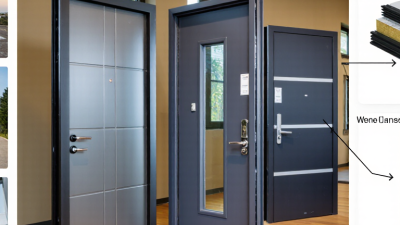
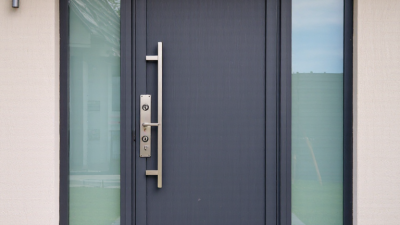
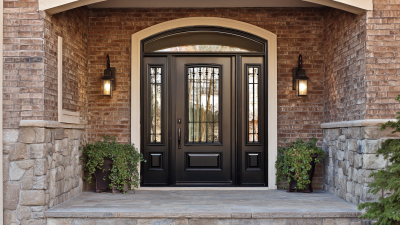
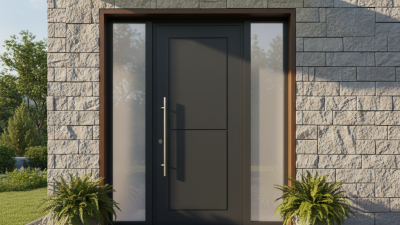
Choosing the best steel front doors for global buyers requires more than comparing finishes, prices, and photographs. A reliable door must perform at the entrance, where rain, heat, wind, noise, and daily traffic meet. The strongest choice balances structural strength, thermal insulation, corrosion resistance, security hardware, and long-term maintenance.
Building-science expert Dr. Joseph Lstiburek often emphasizes, “Water is the building’s worst enemy.” That warning matters here. A beautiful steel front door can still fail when its frame leaks, its threshold drains poorly, or its protective coating does not suit the local climate. Buyers should request clear product specifications, laboratory test reports, coating details, warranty terms, and installation guidance. These documents reveal more than polished catalog images.
Climate changes the decision. Coastal homes may need galvanized steel and advanced anti-corrosion protection. Cold regions need insulated cores, tight weather seals, and thermally improved frames. Hot, sunny locations require durable finishes that resist fading and surface heat. Public or high-traffic buildings may need stronger hinges, closer systems, and replaceable hardware.
No door is perfect.
That is worth remembering. Some designs look impressive but sacrifice insulation. Others offer excellent security but feel heavy or difficult to operate. Global buyers should compare the complete door system, not only the steel panel. Supplier experience, packing quality, spare-parts support, and installation training also matter. The best steel front doors are not simply the thickest or most expensive. They are properly engineered for the building, climate, and people who use them every day.
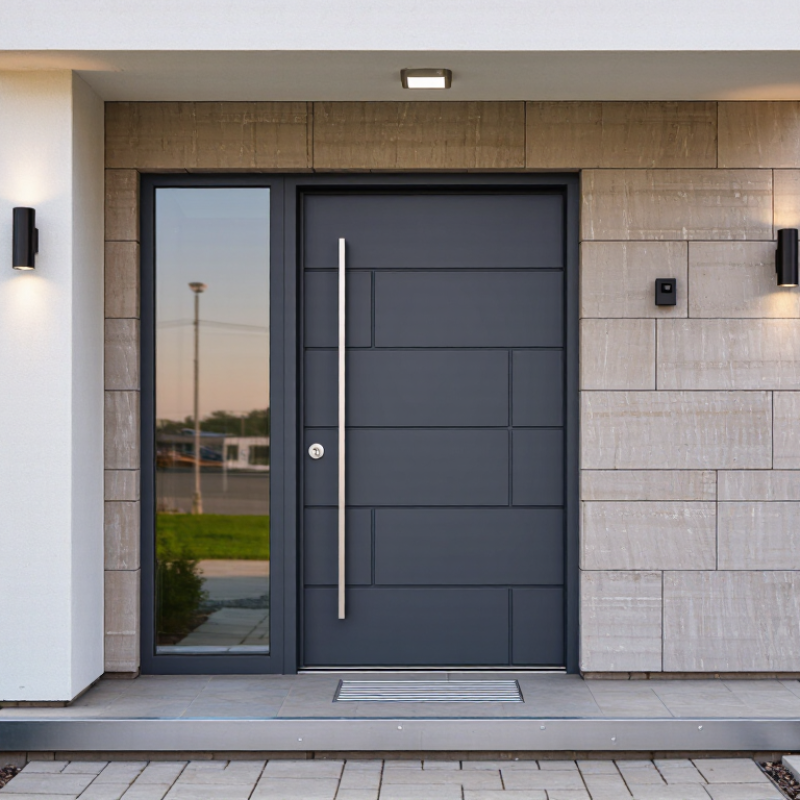
A steel front door for global buyers is more than a heavy metal slab. It is a tested building component that balances security, insulation, weather resistance, and service life. The International Energy Agency reported in its 2023 Global Status Report that buildings consumed about 30% of global final energy. Door performance therefore affects comfort and operating costs, especially in regions with extreme temperatures.
A reliable specification should state the complete assembly, including the frame, seals, glazing, hinges, and threshold. ISO 10077-1 provides methods for calculating thermal transmittance, while EN 14351-1 addresses performance characteristics for external doors. Air leakage, water tightness, wind resistance, and acoustic performance deserve equal attention. Details matter. A thicker door is not automatically better. Poor seals can waste the value of a strong core.
Corrosion protection is also critical for coastal, humid, or high-altitude markets. Buyers should request salt-spray results, coating specifications, and documented quality-control procedures. Fire performance must come from a tested door-and-frame assembly, not an isolated door leaf. In practice, experienced installers often reveal weaknesses that product brochures hide. This is where global purchasing becomes difficult. Not always. Regional climate, installation skill, hardware standards, and replacement access can change the result. A door that performs well in a dry city may need different sealing and drainage details near the sea. Reliable evidence should guide the final choice, not appearance alone.
A steel front door’s durability depends on more than the thickness of its outer skin. Its frame, internal reinforcement, and edge construction all affect how well it resists daily use. A well-built door may use a steel face over a reinforced core, with welded or securely joined edges that limit flexing. When you press near the lock area, the panel should feel firm, not hollow or loose.
Look closely at the frame, too. A strong door fitted into a weak or poorly aligned frame can still bind, leak air, or wear unevenly. Reinforcement around hinges and the lock helps manage repeated opening and closing. Check that weather seals sit evenly against the threshold; a thin strip of daylight can signal a fit problem. Small details matter.
Core materials influence weight, insulation, and sound control, but heavier is not automatically better. The hinges and frame must be designed to carry the door without sagging. Finishes also need attention: scratches that expose bare steel may invite corrosion, especially in damp or coastal conditions. Inspect coating coverage around corners and hardware cutouts. That part is easy to overlook.
For global buyers, compare construction details rather than relying on a single thickness figure. Ask for clear specifications on steel gauge, core type, frame reinforcement, and finish. I would still want to inspect a sample before ordering at scale; photos rarely show how firmly the edges are assembled.
| Steel Door Construction | Typical Steel Skin | Core or Internal Structure | Strength and Impact Resistance | Thermal Performance | Corrosion Resistance | Typical Weight | Best Application | Key Buying Consideration |
|---|---|---|---|---|---|---|---|---|
| Hollow-Metal Steel Door | Approximately 16–20 gauge steel, about 0.9–1.5 mm nominal thickness | Hollow internal construction, usually reinforced with steel channels or stiffeners | High resistance to impact, forced entry, and frequent use when properly reinforced | Low to moderate unless the leaf and frame include a thermal break or insulation | Good when galvanized, primed, and finished with a suitable protective coating; exposed cut edges require protection | Often about 35–65 kg for a standard single door, depending on size and reinforcement | Security entrances, utility areas, apartment buildings, workshops, and commercial facilities | Check the steel gauge, internal reinforcement, frame profile, hinges, lock preparation, and tested fire rating |
| Insulated Steel Door with Polyurethane Core | Commonly 18–20 gauge steel skins with formed or bonded edges | Rigid polyurethane foam core with high insulation efficiency | Good strength-to-weight ratio; resists normal weather exposure and everyday impact | High insulation potential; polyurethane generally provides approximately R-6 to R-7 per inch of core thickness, before assembly losses | Good with galvanized steel and a durable baked-on or powder coating; damaged finishes should be repaired promptly | Often about 30–55 kg for a standard single door | Exterior residential entrances, cold or hot climates, and energy-conscious projects | Compare the complete door assembly U-factor, weather seals, thermal breaks, and frame insulation rather than the core alone |
| Insulated Steel Door with Polystyrene Core | Usually 18–20 gauge steel skins | Expanded or extruded polystyrene insulation, depending on the design | Moderate to good resistance for residential and light commercial use; less suitable for severe abuse without reinforcement | Moderate to high; performance depends on core density, thickness, edge design, and thermal bridging | Good when the steel is galvanized and the coating system is appropriate for the local climate | Often about 28–50 kg for a standard single door | Residential front doors, low-rise housing, offices, and moderate-traffic entrances | Verify moisture protection, edge sealing, compression resistance, and the certified thermal value of the complete assembly |
| Steel Door with Mineral-Wool Core | Commonly 16–20 gauge steel, selected according to the required rating and use | Dense mineral wool or rock wool insulation with steel reinforcement as required | Very good fire and sound performance; strong when paired with reinforced construction | Moderate insulation performance; mineral wool generally provides lower R-value per inch than polyurethane | Good with galvanized or suitably coated steel; moisture control is important because wet insulation can reduce performance | Often about 45–80 kg for a standard single door | Fire-rated corridors, industrial buildings, public facilities, and areas needing acoustic control | Use only a complete tested and labeled door, frame, hardware, and glazing combination for a claimed fire rating |
| Steel-Clad Timber Door | Thin steel skins bonded or mechanically fixed over a timber-based core | Timber or engineered wood core, sometimes combined with insulation and internal reinforcement | Good dimensional stability and impact resistance; the wood core can improve rigidity and sound control | Moderate to good, depending on the timber species, insulation, and edge construction | Good on the faces when coated correctly; exposed edges and moisture infiltration are important risk areas | Often about 35–70 kg for a standard single door | Residential and hospitality entrances where appearance, rigidity, and acoustic comfort are priorities | Inspect the bottom edge, perimeter seals, moisture barriers, hardware fixing points, and compatibility with local humidity |
| Stainless-Steel Front Door | Commonly stainless steel sheet, often in austenitic grades such as 304 or 316 | Insulated foam, mineral wool, honeycomb, or reinforced hollow construction | High durability and strong resistance to dents and surface deterioration when correctly fabricated | Depends mainly on the internal core and frame; stainless steel itself is not an effective insulator | Very good; 316 stainless steel is generally better suited than 304 for chloride-rich coastal or marine environments | Often about 35–75 kg for a standard single door | Coastal locations, high-humidity regions, modern architectural projects, and demanding public entrances | Confirm the stainless grade, surface finish, weld quality, fastener compatibility, and isolation from dissimilar metals |
| Security Steel Door with Reinforced Frame | Typically 14–18 gauge steel, about 1.2–1.9 mm nominal thickness, depending on the design | Multiple steel stiffeners, reinforced lock area, heavy-duty hinges, and a strengthened frame | Very high resistance to forced entry when the entire door set is engineered and tested as one assembly | Low to moderate unless insulated cores and thermal-break frames are included | Good to very good with galvanized steel, zinc-rich primer, and a suitable exterior coating | Often about 55–100 kg or more for a standard single door | High-security residences, warehouses, data rooms, infrastructure sites, and restricted areas | Prioritize the complete tested door set, lock and cylinder protection, hinge-side security, frame anchoring, and installation quality |
| Thermally Broken Steel Door System | Steel sections or steel skins combined with insulated frame components | Insulated door leaf with a thermal break separating interior and exterior conductive metal paths | Good structural strength with improved resistance to condensation and temperature-related movement | High compared with an uninsulated steel system; actual performance depends on glazing, seals, frame, and installation | Good when the exterior finish, drainage, and sealing details are suitable for the climate | Often about 40–80 kg for a standard single door | Cold climates, hot climates, conditioned buildings, and projects with strict energy requirements | Request certified whole-door U-factor or thermal data and check the threshold, perimeter seals, glazing, and frame details |
| Double Steel Front Door | Usually 18–20 gauge for residential use, or heavier steel for commercial applications | Insulated or reinforced construction in two coordinated door leaves | Good overall strength, but the meeting stile and active/passive leaf require careful reinforcement and alignment | Moderate to high when both leaves use insulated cores and continuous weather seals | Depends on steel substrate and coating; the central meeting area needs particularly effective sealing | Often about 60–120 kg for the pair, depending on dimensions and glazing | Wide residential entrances, hospitality projects, public buildings, and large access openings | Check astragal design, multipoint locking, sill drainage, hinge capacity, weather seals, and installation tolerances |
For global buyers, a steel front door should be judged by its tested assembly, not its metal skin alone. A reinforced frame, secure hinge-side fixings, and a quality deadbolt help resist forced entry. Ask for test documentation covering the complete door-and-frame set. A strong slab can still fail at a weak jamb. Small details matter.
Insulation and weather resistance need equally specific evidence. The National Fenestration Rating Council (NFRC) label reports a door’s U-factor; lower values indicate less heat transfer. Check the full configuration, including glazing and edge seals, rather than relying on a center-panel figure. ENERGY STAR reports that sealing air leaks and adding insulation can save an average of 15% on heating and cooling costs in U.S. homes. This is not a door-only estimate, but it shows why drafts deserve attention. For wind-driven rain and air leakage, request results under the AAMA/WDMA/CSA 101/I.S.2/A440 performance standard. Match ratings to local exposure: coastal rain, freezing winters, or strong sun. One practical caveat: lab ratings cannot predict poor installation. A slightly imperfect seal at the threshold may matter more than an impressive brochure claim.
The best steel front door depends on the building, climate, and traffic level. A single-leaf door suits apartments and small offices with limited entry space. Double-leaf configurations work better for hotels, schools, and logistics buildings. They allow furniture, carts, and emergency equipment to pass easily. Unequal pairs can preserve daily access through the active leaf while keeping a wider opening available when needed.
Climate changes the specification. A thermally broken steel frame helps reduce cold bridging in winter climates. Weather seals and a protected threshold matter in wind-driven rain. For bright entrances, insulated steel doors with tested glazing can provide visibility without sacrificing too much security.
The U.S. Department of Energy reports that windows account for about 25–30% of residential heating and cooling energy use. Glazed door sections deserve similar attention, although performance varies by assembly.
Fire-rated, acoustic, and impact-resistant options serve different applications. Fire performance should follow the required local test standard, not a sales claim.
The 2023 Global Status Report for Buildings and Construction from the United Nations Environment Programme states that buildings consume about 30% of global final energy.
This supports careful envelope design, but doors alone cannot solve energy waste. Oversized doors may look impressive and still create sealing problems. Small gaps are unforgiving. Specifications should confirm air leakage, water resistance, thermal performance, hardware cycles, and installation details. A practical review should also question the obvious choice: the strongest door is not always the most usable one.
Global buyers should compare standards before comparing prices. A steel front door may need EN 14351-1 for external performance, EN 1627 for resistance classes, or ASTM-based testing in other markets. Fire-rated models require separate evidence, such as tested assemblies under recognized fire standards. Do not trust a certificate alone. Check its scope, test date, door size, hardware, and laboratory details. Thermal performance also matters. Compare U-values, air leakage, water resistance, and wind-load results for the target climate.
Sourcing quality depends on details that photographs rarely show. Ask about galvanized steel thickness, weld finishing, primer type, powder-coating durability, and drainage design. A door facing coastal air needs stronger corrosion protection than one installed inland. Request a physical sample or production mock-up. Confirm hinges, locks, seals, threshold height, opening direction, packaging, and replacement parts. Some suppliers quote an attractive unit price, then add costly crating or special tooling. That mistake is common.
Tips: Build a comparison sheet with standard, test result, steel gauge, finish, lead time, and warranty. Request inspection photos before shipment. Confirm Incoterms and moisture-resistant packaging in writing. A small sample can reveal poor welds, uneven coating, or weak seals. I have found that “custom” specifications sometimes remain unclear. Recheck every drawing. No standard replaces careful inspection.