China Top 10 Metal Exterior Door Manufacturers
China’s metal exterior door sector combines large-scale manufacturing with increasingly demanding building standards. Grand View Research reports that the global doors market reached approximately USD 140.2 billion in 2023. It also forecasts a 4.6% compound annual growth rate from 2024 to 2030. These figures reflect rising demand for security, weather resistance, energy efficiency, and durable architectural finishes.
China remains an important sourcing base for these requirements. Its manufacturers commonly serve residential, commercial, industrial, and institutional projects. However, factory scale alone does not prove product quality. A serious comparison should examine steel or aluminum grades, frame construction, coating thickness, thermal performance, hardware reliability, and testing documentation. Certification records and traceable quality procedures matter. So does communication after shipment.
This guide reviews China’s top 10 metal exterior door manufacturers through a practical purchasing lens. The selection considers production capability, export experience, customization depth, design consistency, and project support. Site experience often reveals details that brochures hide, such as uneven welds, weak hinges, or poor sealing around the threshold. Small details matter.
No ranking is perfectly objective. Product strengths may vary between factories, product lines, and contract periods. Market reports also use different definitions for metal doors and exterior doors, creating data limitations. Buyers should verify current certificates, sample quality, lead times, and installation guidance directly with each supplier. A reliable manufacturer should welcome those questions. That is a useful signal.
Understanding China’s Metal Exterior Door Manufacturing Industry
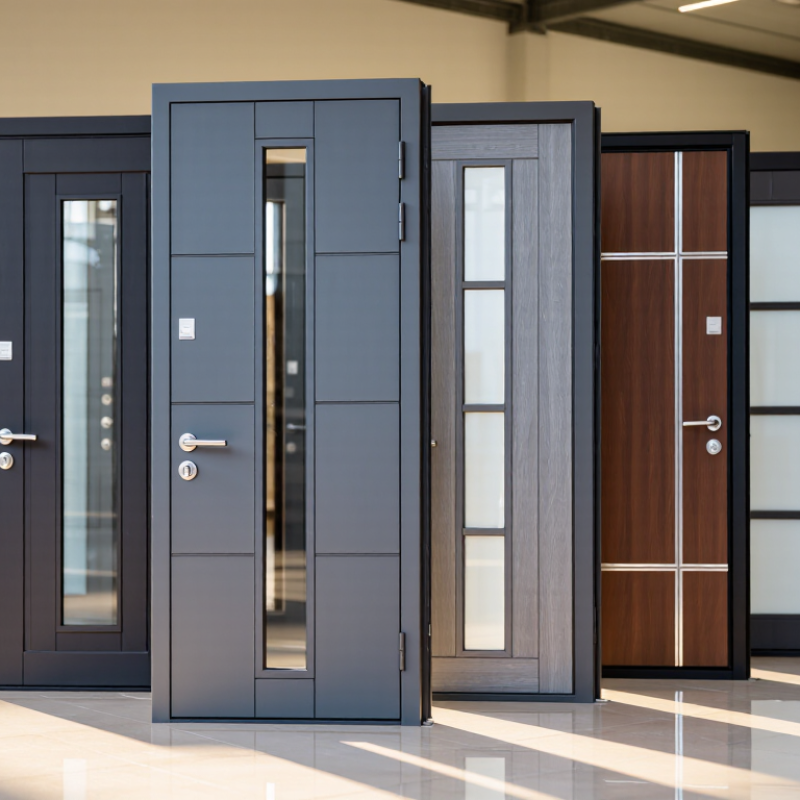
China’s metal exterior door industry serves residential, commercial, and industrial projects, with manufacturers offering steel, aluminum, and mixed-material designs. Production typically involves cutting, forming, welding, surface treatment, and hardware installation. Each stage can affect fit, weather resistance, and service life. A door may look solid in a showroom, yet poor sealing or uneven coating can become obvious after months of rain and sun.
Manufacturing capabilities vary. Some factories focus on standard sizes and steady-volume orders, while others handle custom dimensions, finishes, and insulation needs. Buyers should ask for material specifications, coating details, test documentation, and sample approval before placing an order. Check how the supplier measures tolerances and inspects hinges, locks, and frame alignment. A clear process matters. Honestly, small details are easy to overlook when comparing prices alone.
Tips: Request a production sample or detailed drawings, and confirm packaging for long-distance shipping. Inspect corners, welds, seals, and coating consistency under good light. Ask how defects are recorded and resolved. One more check: verify that the stated performance matches the intended climate and building use.
This chart presents the minimum fire-resistance benchmarks commonly associated with China’s Class A, Class B, and Class C fire-door classifications under GB/T 12955-2015. The figures are technical classification thresholds rather than company or brand performance data.
Key Features of Leading Chinese Metal Door Manufacturers
Leading Chinese metal door manufacturers are distinguished by process control, not just attractive catalogs. Buyers should examine the steel thickness, frame construction, and corrosion protection. Ask whether the steel is galvanized before finishing, and inspect coating coverage around edges and welded joints. These small areas often reveal more than a showroom sample.
Details matter. A precise fit, reinforced hinges, and a well-sealed threshold can improve everyday performance. For doors used in busy buildings, manufacturers should explain how they check dimensions, weld quality, and hardware alignment during production. Request test reports that match the intended application, rather than relying on broad performance claims. Thermal breaks and insulated cores may also help where temperature control is important. Still, specifications need context. A polished sample can mislead.
Reliable suppliers provide clear drawings, material descriptions, and realistic production schedules. They should explain which features can be customized, such as panel patterns, finishes, glazing, or lock preparation, without making vague promises. Ask how orders are inspected before shipment and how packaging protects corners and finished surfaces. A small detail can become a costly problem. Even capable factories can make mistakes, so written tolerances and approval samples are worth discussing before production begins.
How to Evaluate Metal Exterior Door Suppliers in China
Evaluating Metal Exterior Door Suppliers in China
A reliable supplier should explain how its doors are built, not just quote a price. Ask about steel thickness, frame construction, core material, and surface treatment. These details affect weight, insulation, corrosion resistance, and long-term performance. Request drawings and product specifications for the exact model under consideration. A polished catalogue is not enough.
Check how quality is managed on the factory floor. Ask whether the supplier inspects incoming steel, measures finished dimensions, and tests locks, hinges, and coatings. Request recent inspection records or arrange a third-party inspection before shipment. Small differences matter: a misaligned hinge can make a heavy door scrape the threshold. It happens.
Evaluate communication and order control, too. Confirm lead times, packaging methods, spare-part availability, and how design changes are documented. Clear answers are useful; vague promises are a warning sign. If possible, review a sample in person and note the finish, edge details, and closing feel. One limitation: a sample cannot prove every production batch will match, so keep agreed specifications and inspection criteria in writing.
China’s Top 10 Metal Exterior Door Manufacturers
China’s Top 10 Metal Exterior Door Manufacturers are best compared by more than catalog photos. A useful shortlist should include factories with clear material specifications, documented quality checks, and experience producing doors for different climates. Ask whether the stated steel thickness refers to the door skin or the full assembly. That detail matters.
Inspect sample corners, welds, hinge reinforcement, and weather seals. A well-fitted door should close without scraping, while its perimeter gasket compresses evenly. Request test information for air leakage, water resistance, and wind pressure when these measures matter for the project. Verify what was tested: a single door leaf may perform differently from a complete frame-and-hardware assembly. Small detail. Big difference.
No supplier is perfect.
Manufacturers vary in customization, lead times, and export support. Some can adjust dimensions or finishes, but unusual designs may require extra tooling and longer approval cycles. Compare written quotations, finish samples, packaging methods, and spare-hardware availability. A powder-coated surface may look consistent under showroom lighting yet differ outdoors, so review a physical sample in daylight. Buyers should also check how defects are recorded and handled after delivery; this process can be less polished than the product itself. A careful comparison helps identify manufacturers suited to the opening, exposure, and installation conditions.
Choosing the Right Chinese Manufacturer for Your Project
Choosing a Chinese metal exterior door manufacturer starts with the conditions your doors must face. Coastal projects need careful attention to corrosion protection, while busy entrances benefit from durable hinges and tested hardware. Share opening sizes, insulation targets, finish requirements, and expected daily use. Clear drawings reduce costly assumptions.
Ask how the manufacturer controls steel thickness, welding, surface preparation, and coating quality. Request recent test reports that match the proposed door construction, not just a similar product. A sample can reveal details a brochure cannot: edge finishing, latch alignment, and how smoothly the door closes. Details matter. Confirm packaging, shipping schedules, replacement-part availability, and who handles questions during production. A low quote may omit these practical costs.
Compare communication as carefully as price. Agree on inspection points before production, such as checking dimensions and finish consistency. Review the contract and project requirements with qualified local professionals, since performance criteria differ by location. Even a thorough checklist can miss something; revise it after reviewing the first sample and production feedback.